SHERRY
WINES AND
MANZANILLA

The Origin. The Jerez region
Sherry wines and manzanilla are the product of the Jerez region, a unique, historic wine region located in the northwest of the province of Cadiz, the southernmost province of the Iberian Peninsula. Nestled on the Atlantic coast and bordered by the Guadalquivir and Guadalete rivers, this privileged region distills the purest essence of Baja Andalucía: the light, the sea and a landscape of soft white hills where wheat, sunflowers and vineyards alternate throughout the year, tinging hillsides with varying shades of green.
To the north, the imposing course of the Guadalquivir River and its marshes and, beyond, the extraordinary nature reserve of the Coto de Doñana. To the south, vineyards alternate with salt marshes and pine forests. Inland, the Sierra de Cádiz. And to the west, the ocean: the Atlantic coast of expansive, white sandy beaches which from Sanlúcar to Chiclana permeates the entire Jerez region with its influence, soothing the heat of the long summer days with its breezes. The mild climatic conditions and the area’s resources have favored human settlements here since ancient times.
In the Jerez region, winemaking is much more than a simple economic activity, because sherry is much more than a wine. Over a period of almost three thousand years, grapevine cultivation and winemaking have given rise to a broad range of cultural expressions that make the Jerez region truly unique.
Over the course of this long period and aided by contributions from peoples of very different origins, genuinely unique forms of winemaking and wine-aging have been consolidated. This in turn has not only given rise to wines as different as they are extraordinary, but also to exceptional landscapes, professions and architecture, not to mention a local language.
Nine towns in the region have in their respective municipalities vineyards under the Denomination of Origin (DO): Jerez de la Frontera, El Puerto de Santa María, Sanlúcar de Barrameda, Chiclana de la Frontera, Chipiona, Puerto Real, Rota, Trebujena and Lebrija, the latter belonging to the province of Seville.
The Jerez-Xérès-Sherry Denomination of Origin was the first to be constituted in accordance with the 1933 Statute on Vineyards and Wine, making it the oldest in Spain and one of the first in the world. In 1964, with the DO Manzanilla regulations, the authentic identity of this wine and its inseparable link with Sanlúcar de Barrameda was recognized. In addition, the Jerez region is home to another agricultural product that has had the status of Domination of Origin since 1995: Jerez vinegar. At present, the area of production of this product covers a surface area of around 7,000 hectares.
DO Manzanilla-Sanlúcar de Barrameda
Sanlúcar de Barrameda, located in a privileged natural environment between the mouth of the Guadalquivir River and the marshes of the Doñana Natural Park, is the cradle of world-famous gastronomic manifestations. Among them, manzanilla stands out as an indisputable hallmark of Andalusian identity. Because if there is something that distinguishes manzanilla, it is undoubtedly its origin. At the southernmost tip of the Iberian Peninsula, sun, sea, marshes and humid westerly winds bathe this town in the province of Cádiz.
It is precisely this unique environment and its exceptional geographical and climatic conditions that favor the aging of Manzanilla de Sanlúcar de Barrameda as one of the world’s inimitable wines, recognized with its own denomination of origin since 1964. This qualification protects the personality of the Sanlúcar de Barrameda wine in which character and subtlety, power and finesse, complexity and elegance converge.
The production of manzanilla is, therefore, limited exclusively to the city of Sanlúcar de Barrameda.
HISTORY
For 3,000 years, the different historical circumstances have been shaping the identity of the wines of the Jerez region, just as the wine itself, its production, its trade and its enjoyment, have been a determining factor in the history of this region and in the cultural identity of its inhabitants.
Sherry wines originated no less than 3,000 years ago, when the Phoenicians settled in this region to found the first cities in Europe. The first mention of sherry wine is provided by Strabo, a Greek geographer of the 1st century BC, who states that sherry vines were brought to the region by the Phoenicians around 1100 BC. The archaeological sites of Phoenician origin of the Castillo de Doña Blanca, located between Jerez and El Puerto de Santa María and where the oldest complete winery in the West is found, confirm that it was the same founders of ancient Gades (Cádiz) who brought to our lands the art of cultivating vines and making wine from the distant lands of present-day Lebanon.
From Xera, the name given by the Phoenicians to the region where Jerez is located today, these merchants produced wines that were then distributed throughout the Mediterranean, especially to Rome. From its origins, therefore, sherry wine acquired one of the characteristics that has most marked its identity over the centuries: that of being “a traveling wine”.
In the 1st century AD, the Gades-born Lucius Moderatus Columella, owner of an estate in Ceret, was one of the most important agronomists of the Roman Empire and the author of the first great treatise in history on agronomy: De Re Rustica (On Agriculture). In his work he establishes the basis of what has become the Jerez vineyard: the types of soils and varieties of grapevines, the best locations for the vines, the work that was done during the different seasons of the year and the qualities of the musts that were obtained. Today, the continued validity and relevance of Columella’s work is surprising and attests to the importance of the region’s viticulture since Roman times.
During the period of Muslim domination in Spain, Jerez continued to be an important center of wine production despite the Koranic prohibition on the consumption of alcoholic beverages. The production of raisins and the obtaining of alcohol for different purposes (perfumes, ointments...) and the use of wine for medicinal purposes acted in a way as excuses for the maintenance of vine cultivation and winemaking.
In the map of the region dating from 1150 by the Arab geographer Al-Idrisi, the name the Arabs gave to the city of Jerez can clearly be seen: none other than Sherish. The map is proof that the name “sherry”, by which our wines are known in the English-speaking world, is nothing more than a derivation of the ancient Arabic name for the city of Jerez.
After the reconquest, the growing demand for sherry wines by English, French and Flemish merchants forced the city council to enact in 1483 the Ordenanzas del gremio de la Pasa y la Vendimia del Jerez (Ordinances of the Raisin and Sherry Harvest Guild), the first Regulations of our denomination of origin, which regulates the grape harvest, the characteristics of the casks, the aging system and commercial uses of the product.
After the discovery of the Americas, new markets were opened and with them the wine business flourished. This was the age of the great voyages and geographical discoveries. The wine of Jerez shared in these historical events as evidenced by the purchase of 417 wineskins and 253 barrels of sherry by Magellan for his long voyage around the world. The wine is also known to have been present at the celebrations of the conquest of new lands, such as Venezuela and Peru.
The sale of the wine of Jerez in the Indies was frequently hindered by the action of pirates who seized the fleet’s cargoes and sold them in London. In 1582, Sir Francis Drake and Martin Frobisher attacked Cadiz and took 3,000 barrels of wine. The arrival of that booty in London made sherry fashionable among the English court. Indeed, the popularity of sherry in those days can be seen in the works of William Shakespeare, where our wine is mentioned in many of his plays.
Gradually, the increase in demand led overseas merchants from all over Europe to settle in the area during the 17th and 19th centuries. This led to the creation of an important liberalization trend in Jerez and definitively boosted the production and trade of the region’s wines. This process was also a fundamental step in giving the wines of the Jerez region their ultimate identity.
The tendency to store wines from different vintages for a long period of time and the need to supply the market with a stable quality gave rise to one of the essential contributions of sherry winemaking: the criaderas and solera aging system.
On the other hand, as the time during which the wine was kept in the barrels was extended, the practice of fortification went from being a mere means of stabilization for the most fragile wines to becoming an oenological practice, by means of which the winemaker decided the type of wines he was going to make: this addition of wine spirit in different proportions gave rise to the wide typology of sherry wines we know today.
It was also at this time that the great wine-aging cellars appeared. Seeking to reconcile the ideal climatic and architectural conditions for the aging of wines with the prevailing neoclassical aesthetics, the great cellars that still impress visitors today were constructed.
The ensuing years were years of prosperity; in the first decades of the 20th century, with the development of communications and transport, sherry wine continued to expand in international markets.
The sherry sector in Jerez was always at the forefront of European trends, and in the early 20th century it was ready to create Spain’s first denomination of origin. After a comprehensive restructuring of the sector in the early years of the 21st century, the clear focus on quality and added value provided by the wineries has given sherry a new impetus, in its drive to regain its place among the most prestigious wines on the planet. The emergence of initiatives such as VOS and VORS wines, the recovery of vintages, the vindication of single-vineyard wines, of those bottled on the vine and, of course, the clear focus on gastronomy, are repositioning sherry as what it is in its own right: one of the great wines of the world.
VITICULTURE
Climate and Soil
Given its low latitude and location as one of the southernmost wine regions in Europe, the Jerez region enjoys a warm climate. Summers are dry with high temperatures, although the proximity of the Atlantic softens and humidifies the atmosphere, especially at night. Spring and summer, during which the lifecycle of the grapevines occurs, are subject to the prevailing winds known as Poniente and Levante. Winters are mild and summers hot, with an annual average of 300 days of sunshine. Rainfall is relatively high, with an average of about 600 liters per square meter of rain per year, especially in autumn and winter. Except in specific years, this volume of water is sufficient for the healthy development of the grapevines, as it is also complemented by the significant nocturnal dew resulting from the proximity of the Atlantic.
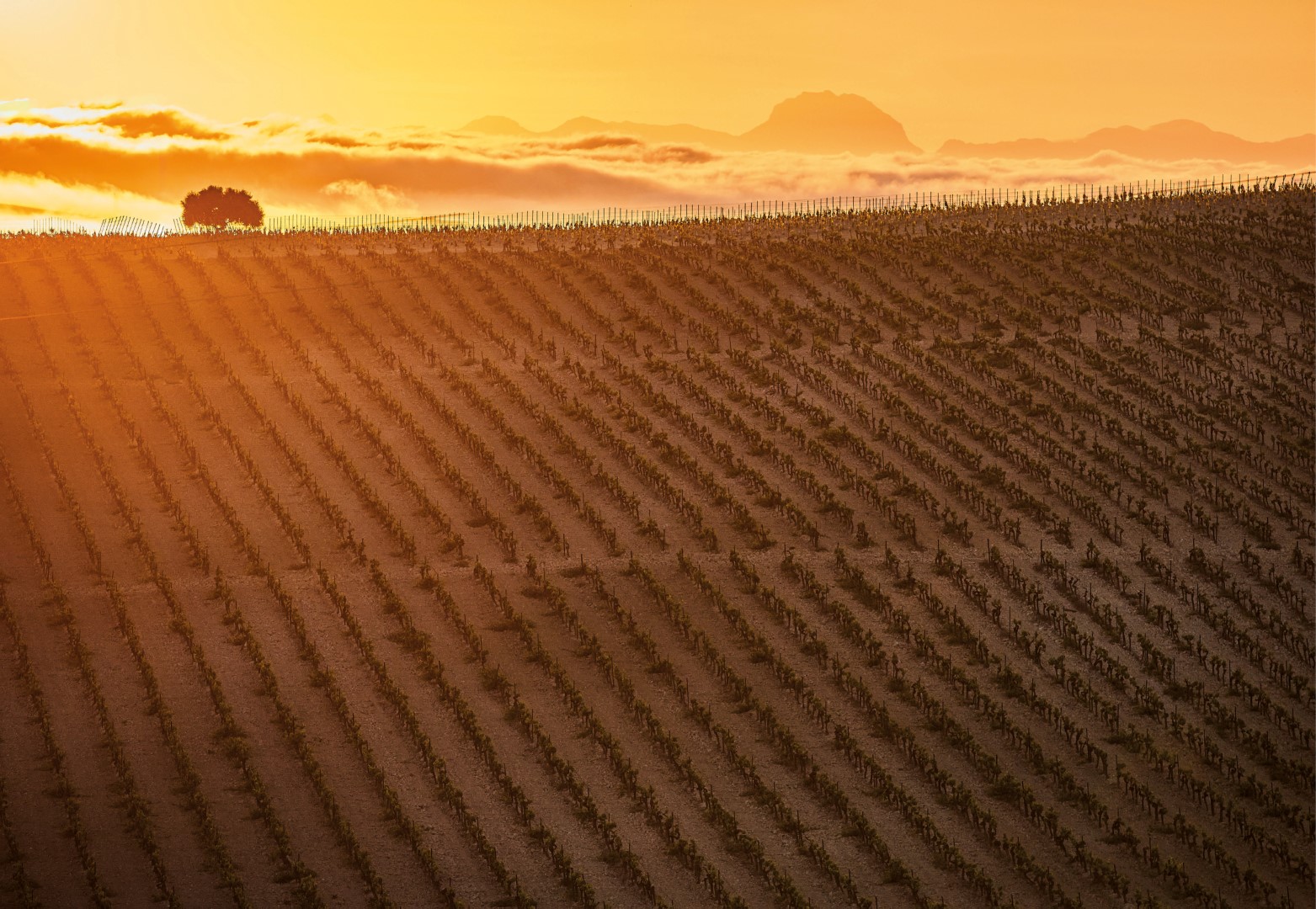
The soil in which the sherry vines sink their roots is called albariza, a very special soil only found in this area. It is a white soil, rich in calcium carbonate and silica from the fossils of the ocean that covered this region millions of years ago.
The characteristic landscape of the Jerez region consists of open, gently rolling horizons of moderately sloping hills covered with this limestone soil that in the dry months is dazzlingly white. The finest albariza, with a higher proportion of limestone and siliceous elements, provides the most select and sought-after wines of the Jerez region. Its main characteristic from a viticultural perspective is its high moisture retention capacity, storing the rain that falls in winter to nourish the grapevines in the dry months. In rainy periods, the albariza expands like a sponge, absorbing large quantities of water.
For centuries, Jerez winegrowers have divided the production area into pagos, small areas of vineyard, with homogeneous soil and meso-climates, and delimited by topographical features. More than 100 pagos exist in the region, bearing such iconic names as Macharnudo, Balbaína, Añina, Miraflores...
Grape varieties
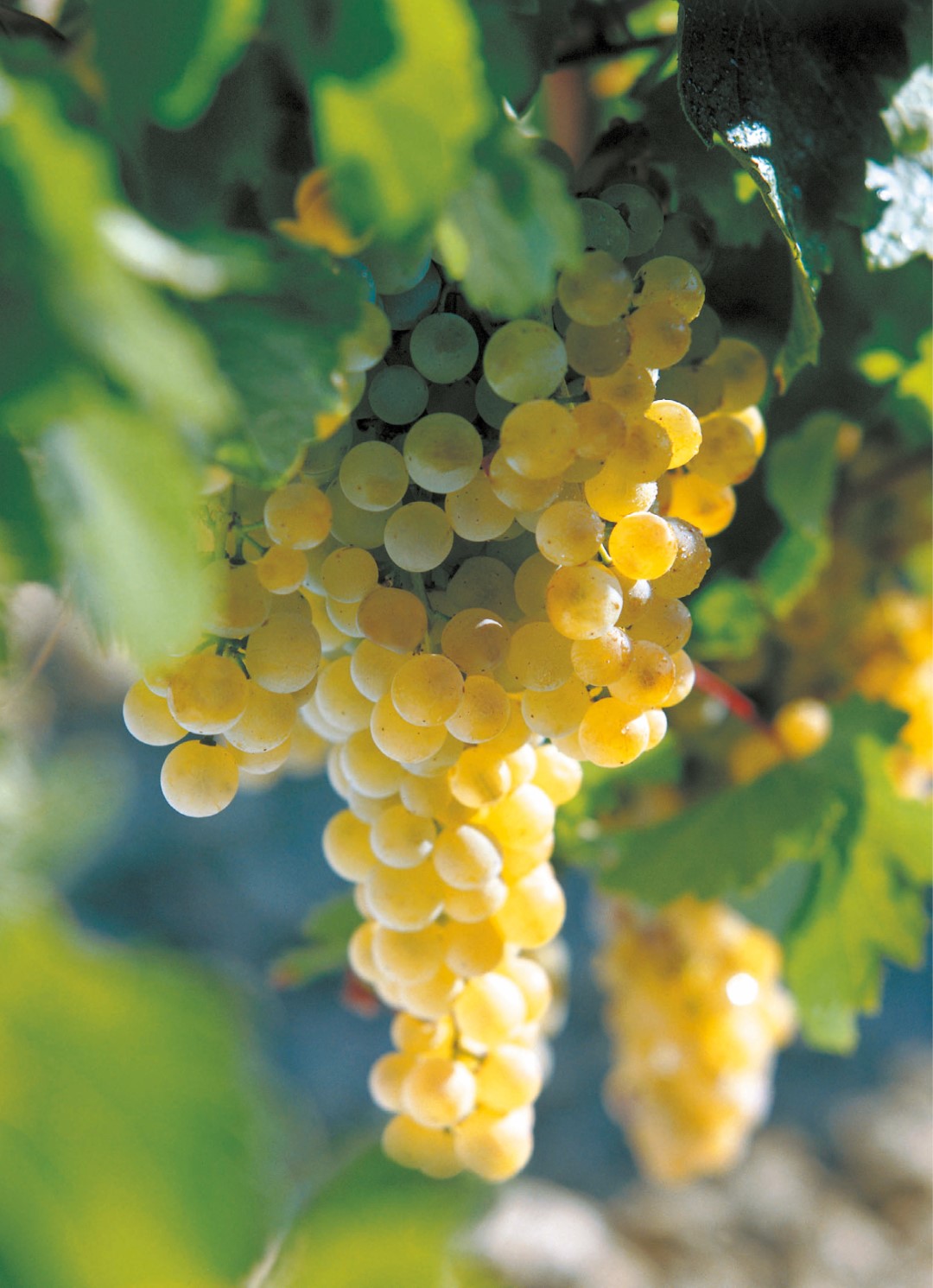
The Regulations of the Control Board specify the following grape varieties for the production of sherry: Palomino, Pedro Ximénez and Moscatel. All three are white varieties.
Palomino
Given its quality, this variety has for centuries been the most traditional of sherries and is today the undisputed queen of the Jerez region, since it is used to make all dry sherries as well as manzanilla. Its identification with the albariza soil, the extreme climate of the area and the ancestral techniques developed by winegrowers make it a very important element in the production of the unique wines of the Jerez region.
Pedro Ximénez
This is another very traditional variety. Due to its higher sugar content and higher acidity levels, it provides high quality sweet wines. It is generally subjected to soleo prior to vinification in order to intensely concentrate the grape’s sugar content.
Muscat
This variety is used in the Jerez region for the production of wines of the same name and is known locally as Moscatel de Chipiona. Originally from Africa, it is widespread in many wine-growing areas throughout the world and was mentioned in antiquity by Columella in the early years of the Christian era. It grows best in vineyards located near the sea.
Cultivation
In addition to natural factors and the varieties used, the way the vine is cultivated has a decisive effect both on yield and on the characteristics of the grapes and the resulting wine.
Sherry viticulture has historically been distinguished by its production of a very special wine, developing practices adapted to the available technology. The winegrower of the Jerez region thus constitutes a true example of sustainable agronomy, achieving a perfect balance in the relationship between man, plant and soil.
WINEMAKING
The grape harvest
The grape harvest takes place in mid-August, when the grapes become soft and sweet. There is no set date for the harvest to begin given that it depends fundamentally on the ripeness of the grapes.
Once the grapes have been harvested, they are transported to the presses where, by gentle pressure, the must is obtained which is the basis for the production of sherry wines and manzanilla.
During the autumn the must ferments, which is the natural process by which the sugars contained in the grape must are transformed into alcohol. The must in this way produces the new wine.
Once fermentation is complete and after devatting when the wine is clear, clean and transparent, the first classification is carried out. On the one hand, the lighter, sharp and delicate wines are identified, which constitute the ideal raw material for the production of finos and manzanillas; similarly, those wines with more body, ideal for the aging of olorosos, are singled out.
Loan from the Sherry Wines and Manzanilla Regulatory Council
In this first classification, therefore, the two great families of Jerez wines are already defined, that of the finos aged under flor and that of the olorosos (O), aged in direct contact with the air.
It is during this early stage in the life of the wine that one of the great protagonists of sherry makes its appearance: the veil of flor.
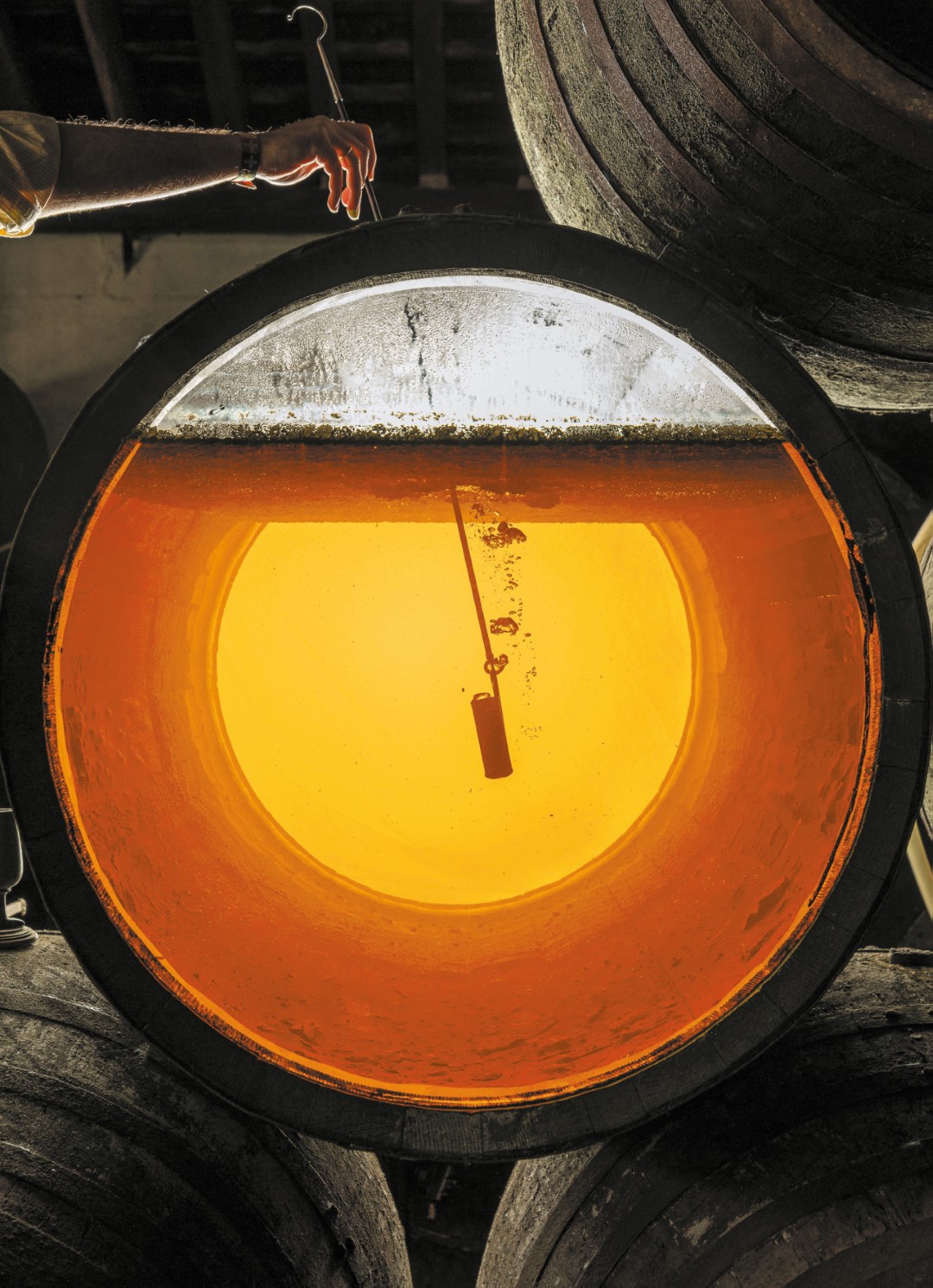
Among the many natural elements that contribute to the uniqueness of the wines of the Jerez region, the flor of the wine is undeniably the most extraordinary. As microorganisms in the wine reproduce they gradually form a veil of yeast that covers the entire surface of the liquid, preventing direct contact between the wine and the air.
Fino and manzanilla are lightly fortified with wine alcohol and begin the so-called biological aging process, that is, they evolve under a veil of yeasts that isolates them from the air and gives them their unique flavor and aroma.
The second type of wines, meanwhile, are fortified with up to 17% wine spirit, which prevents the development of flor. They are stored in barrels to begin aging in the presence of air, known also as aerobic aging, which produces the oloroso wines.
Aging
Aging is the final and definitive phase in the winemaking process. It lasts the longest and is responsible for establishing the organoleptic characteristics that produce the broad range of sherry wines.
In accordance with the Regulations of the Denomination of Origin, the wines must be aged for a minimum of two years for the characteristics typical of each type of wine to appear.
The criaderas and solera system
The traditional, authentic method used to age sherry wines is known as the criaderas and solera system. This is a dynamic system whereby younger and older wines are methodically blended together in order to perpetuate certain characteristics in the wine that is finally marketed.
To ensure this aging method is done properly, the wines must be arranged in casks in the wine cellar according to their age. This takes place in the so-called criaderas. Each solera system is therefore composed of several criaderas, or wines arranged in gradations of aging, stored in horizontal rows of casks.
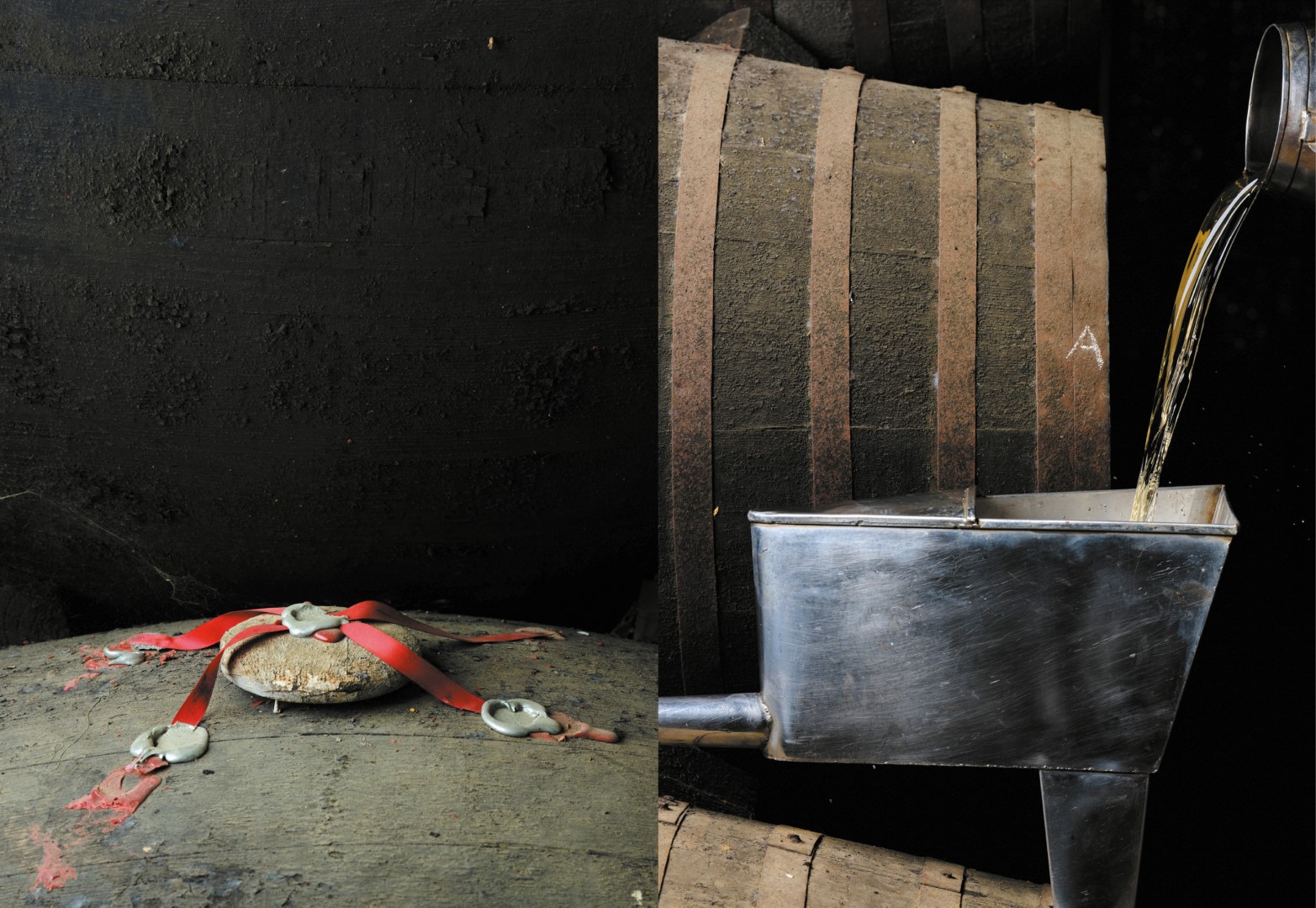
The solera, or most aged wine, produces the wine destined for consumption. Periodically, a certain proportion of this wine is extracted from the casks that make up the solera in an operation known as saca, producing a partial vacuum in these casks. This vacuum is filled with wine from the casks of the next aging gradation one row up, and so on until reaching the youngest gradation, which in turn is filled with wine from the preceding year (sobretablas).
The solera system imprints a very special dynamic on the aging process, uniquely influencing the wine while maintaining its characteristics by eliminating any oscillations that occur between vintages. The wine is not only modified by this effect of concentration but is further enriched by subtle and specific contributions from the wood of the cask, which has previously been seeped for a lengthy period in wine before being used as an aging vessel. Furthermore, the wine’s evolution in this peculiar environment is catalyzed by gradual but continuous doses of oxygen that manages to penetrate the wood; or, in a different, more dynamic and substantial way, through biological aging under the veil of flor, or yeast.
The complex processes that make possible the aging and vintages of sherry wines require precise environmental conditions, which are not always available in a climate such as that of the Jerez region. This has forced winemakers to adapt their wineries to mitigate the negative factors of the climate and take advantage of positive ones. Aesthetically, the wineries of the Jerez region are beautiful constructions, often of considerable size. Seen from the perspective of the aging process necessary to produce sherry, meanwhile, the bodegas are extremely functional.
The orientation of the floor plan along with the constructive characteristics of the facade and roof of the winery act as a filter that either rejects or captures external climatic elements to favor the aging process. Interior temperature fluctuations are avoided thanks to the thermal inertia of the walls and their permeability to humidity which thus manage to calibrate the stability of day/night hygrothermal constants.
The cellars are built in strategic locations that facilitate circulation for the gentle currents of the south and west winds coming from the Atlantic.
The wine cellars of Jerez are unusually tall buildings, reaching up to 15 meters in height at their central arch. A large volume of air is thus formed in their interior whose function is to provide the flor yeast with the oxygen necessary for its development inside the cask. Additionally, the large cellar space acts as an insulating chamber, regulating temperature and humidity.
Externally, in summer, the south façade is protected by vegetal screens of trees or by pergolas on the adjoining streets that absorb solar radiation and function as breathable roofs that allow the gentle breeze that penetrates into the cellars to filter the air and maintain the right hygrometric level inside.
These screens make possible uniform shade in the cellars, which is an essential instrument for regulating the temperature and repose of the casks.
To support the height of the external walls as well as provide excellent thermal insulation, the side walls of the cellars are never less than 60 cm thick. These walls are made of materials with high hygroscopicity, which contributes to maintaining a very high degree of humidity.
The floor is covered with albero (pipeclay), which is watered according to the season of the year to achieve the regulated temperature and humidity. The albero clay is a very porous material that increases and maintains cooling, since, once saturated, it gradually releases water into the atmosphere.
In short, a whole set of construction techniques that provide the wine with an ideal environment for aging to develop under optimal conditions.
THE TYPES
Undoubtedly as a consequence of its long tradition, Jerez winemaking is one of the most advanced in the world, with an absolutely authentic production process. Making use of only three types of grapes, all of them white, the winemakers are able to produce more than ten different types of wines, ranging from the driest to the sweetest, and from the palest to the darkest.
Diversity is undeniably one of the distinctive features of Jerez’s identity: finos, olorosos, moscatels... different wines that offer us a seemingly endless palette of colors, not to mention the extraordinary variety of aromas, flavors and textures that make up the universe of wines from these denominations.
Essentially, what makes sherries different is the type of aging (whether biological, under flor, or oxidative) and the type of fermentation with which the must has been vinified.
Within the wide variety of types of sherry there are three main categories: Generosos, Generosos de licor and natural sweet wines.
Generosos
Generoso wines are dry wines (with a maximum residual sugar content of 5 grams per liter). Their production process includes a complete fermentation of the musts at the end of which the yeast veil, or veil of flor, appears in the base wine.
Fino
Fino is a dry white wine made from Palomino grapes. It is aged under the layer of yeasts that form the veil of flor. It is the great symbol of the intensity, richness and generosity of Jerez wines.
It is a white wine of a brilliant color that ranges from straw yellow to a pale gold. It has sharp and delicate aromas, with slight hints of almonds and notes of fresh bread dough and wild herbs. It is very dry on the palate, delicate and light. The almond notes return in the aftertaste leaving a pleasant sensation of freshness.
Due to its gastronomic versatility, it deserves a prominent place at the table. Its delicately sharp aromas and light hints of almonds elegantly enhance the saline and iodized flavors of oysters, caviar, fish, seafood, sushi and sashimi.
Oloroso
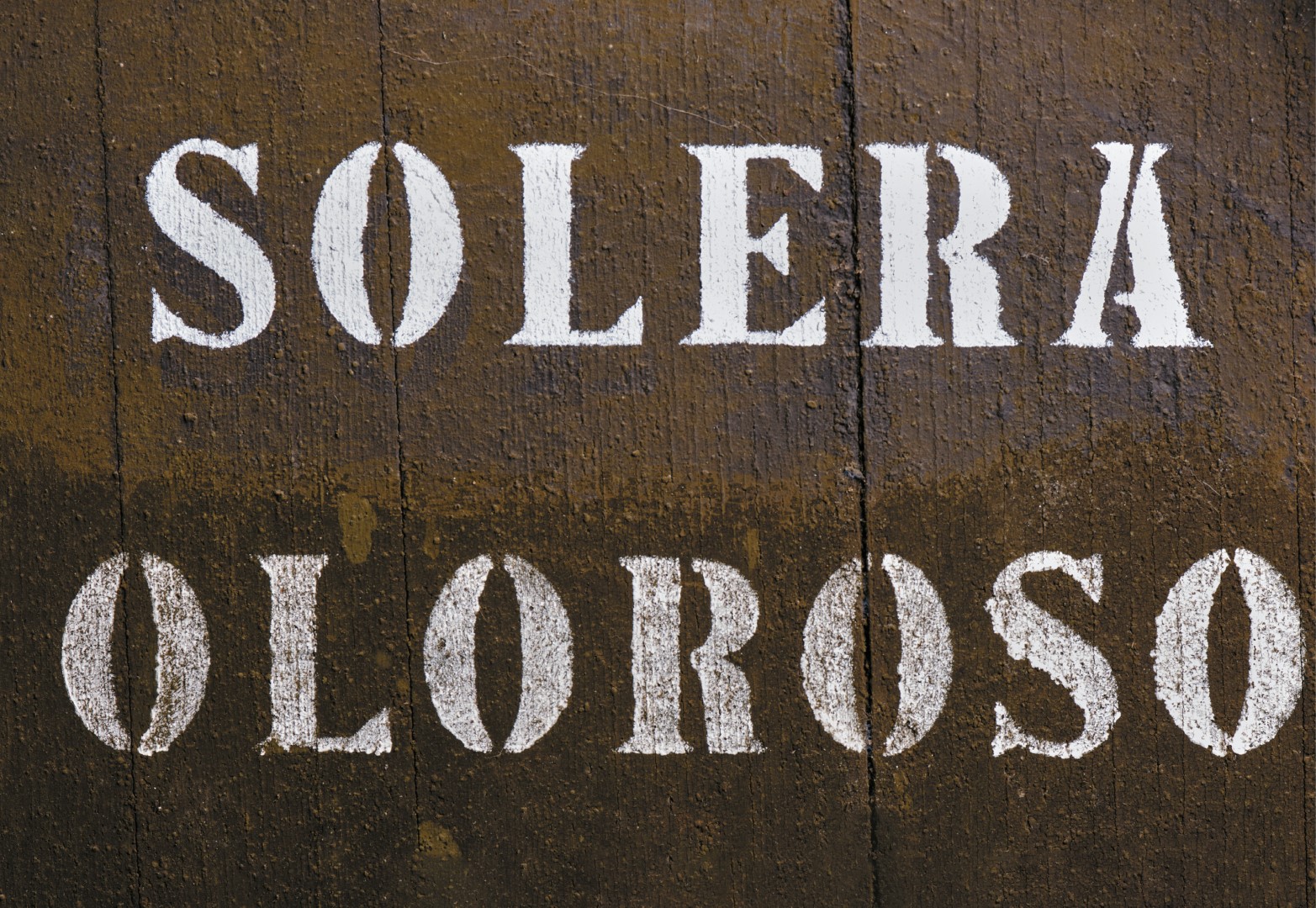
Like fino, this wine is made from Palomino grapes. Its early, special structure makes it suitable for oxidative aging. Alcohol is added up to 17° for this purpose, which prevents the veil of flor from developing and ensures the wine ages in contact with oxygen. The result is a highly structured, complex wine.
The color of the wine ranges from amber to mahogany. Its warm, round and, as its name indicates, complex and powerful aromas (oloroso may be translated as “aromatic” or “scented”) are reminiscent of dried fruits, spices, and toasted and balsamic notes that also recall hardwood and tobacco.
In the mouth it is a dry, flavorful and highly structured wine. Powerful, round and full-bodied, its glycerin content makes it smooth on the palate. It has a long finish and complex retro-nasal aromas. It highlights notes of noble wood that contribute to a very elegant finish.
It is quite capable of accompanying dishes of strong character, alongside of which it unleashes its full potential. It is the most appropriate wine for red meats and game. It combines perfectly with stews such as of oxtail or pork cheeks. It has an exceptional pairing with mushrooms, as well as with very aged cheeses.
Amontillado
Amontillado is a highly unique wine, as it combines aging under the veil of flor, typical of fino and manzanilla, with a subsequent period in which the veil of flor disappears and the wine is exposed to oxidation. Made with Palomino grapes, this fusion of aging makes amontillado an extraordinarily complex and interesting wine.
It has an elegant color that can range from topaz to amber. Its aroma is complex and delicate, with an ethereal base softened by aromas of hazelnut and noble woods along with vegetal aromas reminiscent of aromatic herbs.
The feel upon first entering the mouth is elegant with balanced acidity. Its subsequent development is complex and suggestive, finishing in an enveloping way with a lingering aftertaste in which notes of dried fruits and noble woods are again present.
This wine excels with exotic cuisines, as its dry and intense flavor adapts well to daring pairings. It exponentially enhances any dish it accompanies: spicy stews, truffles, mushrooms, white meats, smoked and braised meats, curries and red tuna, as well as asparagus and artichokes. In addition to appetizers, it is the perfect companion for white meats, blue fish and aged cheeses.
Palo cortado
With its combination of aromatic delicacy and volume on the palate, this is the most sophisticated sherry wine. Known as a “meditation wine”, it is ideal for slow tasting and letting oneself become immersed in the various nuances and harmonies of this exceptional wine.
Ranging in color from chestnut to mahogany, its aroma presents a great variety of nuances, harmoniously combining the characteristic notes of amontillados and olorosos with other citric notes reminiscent of bitter orange, and lactic ones, such as fermented butter. Its palate is round, deep and voluminous, with soft, delicate aromatic notes in the aftertaste that produce a pleasant, lingering finish.
It combines perfectly with blue fish, meats and stews, with concentrated consommés, Iberian cured meats and cured cheeses.
Generosos de Licor
The fortified liqueur wines known as Genorosos de Licor are defined in the Regulations of the Control Board as wines elaborated using the traditional method of cabeceos or combinations of fortified wines with natural sweet wines or, in certain cases, with concentrated must.
These are wines of varying degrees of sweetness, but always with a sugar content of more than 5 grams per liter. Depending on the fortified wines used as a base and the final sweetness levels of the cabeceo, the following types of sherry wine can be distinguished.
Pale cream
Pale cream is a fresh, delicious wine ideal for those who like the sharp and light notes of biological aging tinged with a delicate sweetness.
Straw yellow to golden in color, the aroma shares the sharp sensation of organically aged wines and their hints of hazelnut and fresh-baked bread scents from the aging.
In the mouth it is light and fresh, but with a delicate sweetness that makes it very enjoyable on the palate. This balance makes pale cream the ideal wine to drink with foie and pâtés, and even with fruit salads and desserts.
Medium
Medium is a very balanced semi-sweet wine made from a blend of dry and sweet wines.
It is amber to dark brown in color, with liqueur aromas typical of amontillado and slightly sweet aromas of pastries, quince jelly or baked apple.
It has a slightly dry entry in the mouth that turns sweet and ends with a balanced and smooth aftertaste.
Ideal with pâtés, quiches, spicy dishes of exotic cuisines such as Indian or Thai. Additionally, served cool, medium is a very pleasant aperitif.
Cream
Cream is a blended wine, obtained from dry, oxidative aging wines, generally sweetened with Pedro Ximénez wine. It is most commonly made with an oloroso base, which gives it an intense character and a full body.
A wine that ranges from chestnut to dark mahogany in color and with a creamy appearance, it combines marked aromas of dried and toasted nuts and fruits with sweet notes such as nougat and caramel.
In the mouth it is pleasant, velvety in texture, with a balanced sweetness, a seductive palate and a long, elegant aftertaste. It thus combines well with fatty foods such as soft cheeses and blue cheeses. It makes a sublime pairing for foie gras and pâtés, and even goes well with spicy recipes. In desserts it pairs well with ice creams, fruit and pastries. Served alone in a glass with ice and a slice of orange, it is an exquisite aperitif.
Natural sweet wines
Natural sweet sherry wines are wines obtained from musts elaborated from very ripe grapes or ones that have received considerable sunlight, generally of the Pedro Ximénez or Moscatel varieties. The musts, which are rich in sugars as a result of the sun-drying, raisining process, are only partially fermented in order to preserve most of the original sweetness. For this purpose, wine alcohol is added to them once they begin to ferment. The wines thus obtained are subsequently aged in direct contact with oxygen in the air, which gives them an intense mahogany color and a dense appearance. Depending on the grape variety used, the resulting natural sweet wines are the following:
Pedro Ximénez
Pedro Ximénez wine is made from the grape of the same name, which is raisined in the sun to obtain a must with an extraordinary concentration of sugars. Its aging, exclusively oxidative, results in a progressive aromatic concentration and increasing complexity without losing the freshness typical of the grape variety.
Ebony-colored with iodized iridescence, the wine’s streaks or tears on the glass are very wide, producing a visual sensation of great density.
Its bouquet offers extremely rich aromas, with a predominance of sweet notes of dried fruits such as raisins, figs and dates, accompanied by aromas of honey, syrup and stewed and candied fruits. As it ages, toasted aromas (coffee, bitter chocolate and cocoa) and licorice become accentuated.
The palate is velvety and unctuous, with a natural acidity that mitigates the extreme sweetness, and a long and savory finish.
It pairs exceptionally well with blue cheeses of great intensity and with dark chocolate-based desserts and ice cream.
Moscatel
Moscatel is a type of single-variety sherry in which fruity notes predominate typical of this grape (Muscat) known for its striking aromatic personality. Muscat vineyards are located near the shoreline, in sandy soils, where the sea has a powerful influence.
The wine ranges in color from chestnut to deep mahogany, with a dense appearance and a wide tear or streak. Notable in terms of its bouquet are the various, typical characteristics of the Muscat grape, with floral aromas of jasmine, orange blossom and honeysuckle, as well as citrus notes such as lime or grapefruit and other sweet ones.
Its palate offers fresh sweetness, highlighting the full range of floral flavors with a slightly dry and bitter finish.
An ideal accompaniment to refreshing dishes, such as fresh fruit salads and moderately sweet desserts, it is perfect with pastries, ice cream, candied fruits, creamy cheeses and dark chocolate.
Manzanilla
Manzanilla is a dry white wine with its own denomination of origin. Made from Palomino grapes and aged under a layer of veil of flor, it is produced exclusively in cellars in Sanlúcar de Barrameda. The special climatic conditions of this city, located at the mouth of the Guadalquivir River, favor the development of a very peculiar veil of flor. This gives the wine unique characteristics.
A bright straw yellow in color, it has a sharp and delicate aroma in which floral notes reminiscent of chamomile, hints of almonds and freshly baked bread stand out. The palate is dry, fresh and delicate, with a light and smooth mouthfeel despite its dry finish. It has a slight acidity that creates a pleasant sensation of freshness and a persistent, slightly bitter aftertaste.
Its versatility in pairing is particularly remarkable. Its saline character enhances all flavors, especially those derived from the sea, such as seafood and fish. It also harmonizes with foods that have certain saline touches such as sausages and salted meats, as well as with dishes containing vinegar: salads, marinades, pickled dishes and cold soups.
Enjoyment
sherry at the table
Sherry is a wine to be enjoyed at the table. Its exquisite complexity improves and enhances the flavors of the dish it accompanies.
Sherry is often referred to as “the most civilized aperitif in the world”. Few wines can prepare our palate for culinary pleasures like a well-chilled fino or manzanilla. But the possibilities of sherry wines go far beyond this: their exclusive origin and peculiar method of elaboration give them a series of characteristics that make possible extraordinary pairings with a range of dishes.
They are the perfect accompaniment for an enormous number of flavors and recipes. From the driest to the sweetest, the versatility of sherry wines has captivated prestigious sommeliers and chefs around the world, who find in them the perfect ally for their creations.
Their extraordinary variety of aromas and flavors not only harmonizes with but also admirably enriches appetizers, main courses and desserts. Whether fish or seafood, meats, cheeses or pastries, sherry wine simply elevates the gastronomic experience to a higher level.
Occasionally, sherry is not just an option but the only viable solution to accompany certain complex dishes such as artichokes or asparagus, and very spicy or especially acidic dishes.
Sherry is truly versatile. In addition to traditional Spanish and European cuisine, it opens up new territories of taste with different cuisines of the world, especially with Japanese dishes such as tempura, sushi or sashimi, Chinese cuisine with delicate flavors, spicy Thai dishes or the creations of Peruvian or Mexican cuisine. Where other wines lose their reference, sherry rises to the occasion and increases the pleasure of good food. They are particularly flavorful wines, capable of creating pairings in the deepest sense of the term: it is not a matter of simply establishing a pleasant complementarity between wine and dish, but of creating a true symbiosis. sherry enhances the most genuine characteristics of food and sometimes provides us with totally new and original aromatic, gustatory and textural sensations.
There is a sherry for all tastes and occasions. Its extraordinary variety of aromas and flavors elevates the gastronomic experience to a higher level.
Storage
Like any other quality wine, bottles of sherry require respectful treatment to ensure the wine suffers as little as possible on its journey from the winery to the moment it is uncorked.
The maximum period a wine can remain bottled and maintain its original characteristics will depend on the type of sherry. Logically, biologically aged wines – finos and manzanillas – are more delicate and removing them from their cask implies an important change of habitat as they lose their protecting veil of flor that insulates them from oxidation.
Whatever the wine, it will always be necessary to respect certain periods of conservation in the bottle, after which a certain evolution and variation of some of the organoleptic characteristics of the wine will begin to occur.
While it is true that sherries are not wines for cellaring, their evolution in the bottle is very slow and even very much appreciated by certain wine lovers.
This process of change obviously accelerates once the bottle is opened. Although it is not absolutely necessary in the case of sherry to consume the contents of a bottle at once, direct contact with the oxygen in the air once the cork has been removed produces a more rapid evolution of the wine.
In general terms, and provided that the bottles are transported and stored carefully and without major temperature fluctuations, we can say that these periods of storage are as shown in the table below. As with any other quality wine, the bottles should be kept in a quiet, dark place without thermal oscillations or vibrations.
Unlike other wines, bottles of sherry should be kept in a vertical position so that the surface area of wine in contact with the air in the bottle is as reduced as possible, thus limiting oxidation.
|
Type of wine |
Unopened bottle |
Opened bottle* |
|---|---|---|
|
Fino / Manzanilla |
12 to 18 months |
1 week |
|
Amontillado / Medium |
18 to 36 months |
2 - 3 weeks |
|
Oloroso / Cream |
24 to 36 months |
4 - 6 weeks |
|
Pedro Ximénez |
24 to 48 months |
1 - 2 weeks |
|
VOS / VORS |
Undetermined duration |
* Well-sealed and in the refrigerator
Service
The simple act of enjoying a glass of sherry is the culmination of a very long process that begins in the vineyard and continues in the winery. For generations, great professionals have put their knowledge and experience at the service of a series of natural processes only possible in the Jerez region.
The selection of an appropriate serving glass (wide, slender and of fine crystal) is as important as the temperature at which the wine is served. The glass should not be filled to more than a third of its capacity so that the aromas generated during years of silent aging can fully manifest themselves.
|
Optimum tasting temperature |
|---|
|
Finos and manzanillas: 6 °C-8 °C (43 °F-46 °F) |
|
For all other wines: 12 °C (54 °F) |
|
For VOS and VORS wines: 14 °C (57 °F) |