2 1909-1919 THE CONSOLIDATION OF BARÇA AT CALLE INDUSTRIA
A new stage in the club’s history began, that of its consolidation in the football and social panorama of the city and the country. It is a process in which several circumstances converged: the first was the consolidation of the club as an entity, with a steady increase in the number of members and the reform of the statutes; the second was the inauguration of the first major ground, the pitch in calle Industria, which was inaugurated on 14 March 1909 and was the home of the Barcelonistas until 1922. And this period coincided with the great social movement sparked off by the events of the Tragic Week in the summer of 1909, with serious riots in Barcelona and other Catalan cities.
The growth of the club was remarkable. The initial 201 members in 1909 grew to 2,973 in just ten seasons. It was a time when Barça laid a solid foundation to decide what kind of entity it wanted to build on, what kind of football club it wanted to become. It was as if FC Barcelona had come of age prematurely, surpassing the initial dreams of the group of friends who founded the club in 1899 for the purpose of practising sport on a daily basis. The path that would lead to the great entity that is FC Barcelona had begun.
In the four seasons between 1909 and 1913, the club won the Spanish championship, also known as the Copa del Rey or The Cup, three times, and the four Pyrenees Cups, the first international tournament in which the club participated. This competition was contested by teams from Catalonia, the Basque Country and the south of France.
CHAMPIONS OF SPAIN
Of particular importance was the first Spanish title, won in the 1909-10 season, which confirmed FC Barcelona’s status as an established team. It had already dominated the Catalan championship and made the leap to the national level. They beat Español de Madrid 3-2 in the final match of the Spanish championship, with goals from Wallace and Comamala (two). Their return to Barcelona was spectacular, with thousands of fans waiting for them to disembark at Passeig de Gràcia.
In February 1910, the club held a competition to decide on the format of the crest that we all know and love, and which, with slight variations, has survived to this day, the work of Santiago Femenía.
The win in Madrid completed their triumph in the first ever international trophy, the Pyrenees Cup, which brought together Catalan, Basque and French clubs. Barça beat Real Sociedad 2-1 in the final in Toulouse. Their return to Barcelona was greeted with a similarly enthusiastic reception from the fans. These successes led to an increase in membership, and it became customary for supporters to go out and welcome the team after every major victory. From 1909, the team’s results were first announced at the drinks kiosk in Canaletes. It was the beginning of the Canaletes-Barça idyll that still exists today.
In February 1910, the club held a competition to decide on the format of the crest that we all know and love, and which, with slight variations, has survived to this day, the work of Santiago Femenía. The crest is a good illustration of the club’s identity. It shows the cross of Saint George and the four stripes of the flag, symbols of Catalonia; the colours of the club, blue and garnet, and a ball in the middle.
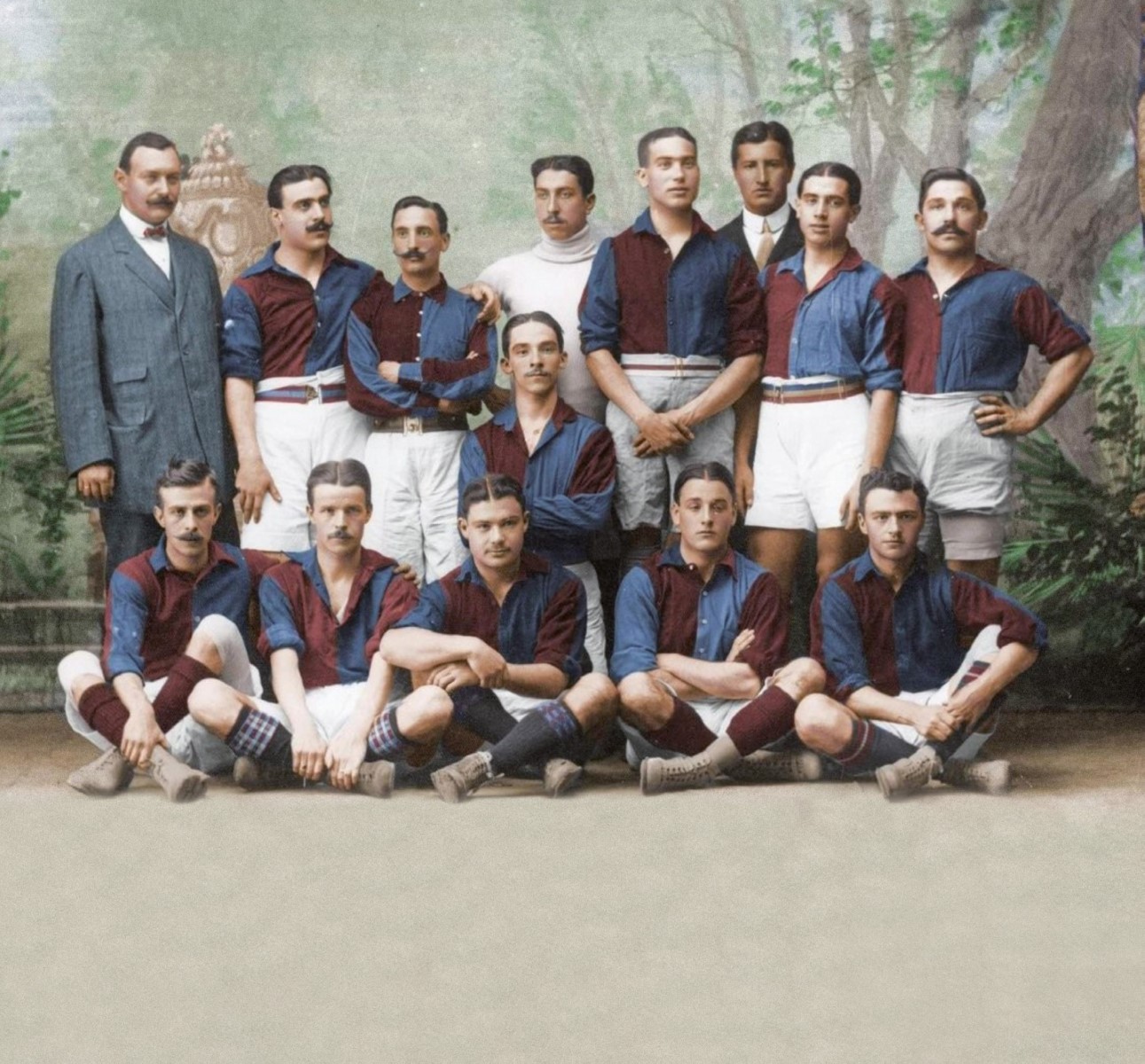
A TEAM OF PIONEERS
The Barça team in the 1909-10 season. Standing, Joan Gamper. He was joined by Bru, Morris, Solà, Quirante, Otto Gmelin (president), Grau and Sans. Kneeling, Peris. Sitting, Forns, Wallace, Carles Comamala, Macià and Arseni Comamala
It was during those years that Paulino Alcántara, the Filipino star player, made his debut in the 1911-12 season at the age of just fifteen. He was Barça’s first popular star and, until Lionel Messi came along, the club’s all-time leading scorer with 395 goals. He had such a powerful shot that he once broke the net. He always wore a white handkerchief around his waist to identify himself to the fans.
The 1908-09 season marked the beginning of FC Barcelona’s dominance of the Catalan championship. By 1919, Barça had won the league five times, including the 1909-10 Catalan championship in which the team went undefeated. They won every game.
The 1912-13 season confirmed the turmoil in Spanish football at the time. Barça won the national championship by beating Real Sociedad 2-1 after drawing the first two games. All three games were played at Barcelona’s calle Industria ground. Organised by the dissident Spanish Union of Football Clubs rather than the Spanish Football Federation, the competition was known as the Copa de la Reina because the Federation held the patent for the Copa del Rey. The Federation competition was won by Real Unión de Irún, but when the Federation and the Union reunited, it was decided that both competitions, the Copa del Rey and the Copa de la Reina, would be considered official and would be included in the respective trophy lists of both champions.
GAMPER THROWS IN THE TOWEL
1914 marked the end of a period of federal turmoil in Catalonia and Spain. Barça’s founder, Joan Gamper, had resigned as president the previous year, fed up with the club’s internal wars. The team did not fare well in the 1913-14 season, finishing third in the Catalan league and missing out on the Spanish championship (which was a qualifying competition). They did not fare any better in the Pyrenees Cup, which they had won the previous season. They were knocked out by French side Lille.
The 1915-16 season saw the birth of the rivalry that still exists today between Barça and Real, or in other words, Barcelona and Madrid. They were paired together in the Spanish championship and had to play four matches to determine the winner of the play-offs. In Barcelona the home team won, in Madrid their rivals won. There was a tie-break without a winner and in the fourth and final game, referee Berraondo’s performance went against Barça who, in agreement with their captain, decided to withdraw from the match. The score was 4-2 in Madrid’s favour.
In June 1917, Joan Gamper returned to the Barça presidency for the third time. The club needed him and he did not want to let his beloved Barça down. Years earlier, in September 1912, the first coach in history, Mr Barren, had joined the team. Until then, there had been no such person. FC Barcelona hired him as the first coach to work exclusively in that capacity.
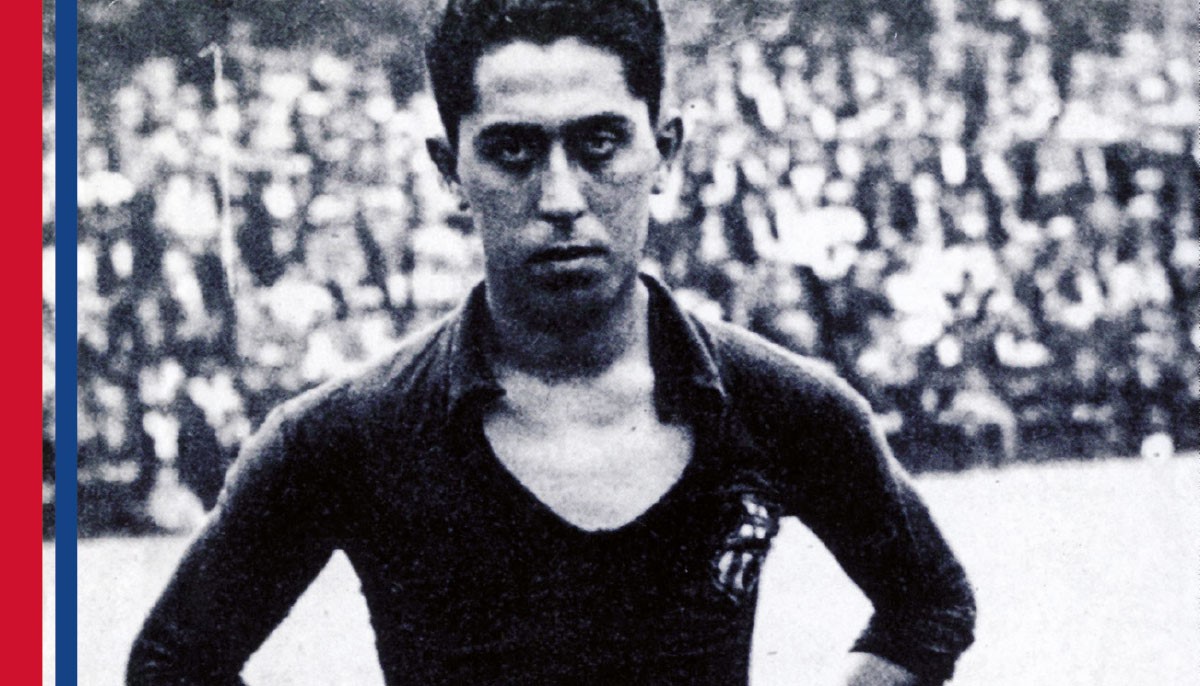
Paulino Alcántara was Barça’s first great mass idol, also a great goalscorer.
An Englishman, Barren took over from Billy Lambe, the first coach in the club’s history who had also been a player. Barren was a coach only and had come from England for that purpose. His surname (Barren, Barzon or Baron) is unclear, although Barren was the version most often used in the press at the time.
In 1913 the historic Jack Greenwell, who still played occasionally, spent ten years on the bench, although in his first season he was on the verge of being sacked because of poor results. He eventually settled into his position and achieved good results. He is one of the coaches with the best CV in Barça’s history.
The final years of the decade were marked by a friendly match against a selection of players from the victorious countries of the First World War - France, Belgium and England.
However, the most important event of the 1918-19 season was the debut of two important and emblematic players: goalkeeper Ricardo Zamora and striker Josep Samitier. The former came from Espanyol and the latter from Internacional. They first donned the blue and garnet in the second match against the Anglo-French-Belgian side. The goalkeeper was eighteen and l’Home Llagosta, as he would become known for his acrobatic finishing, was seventeen.
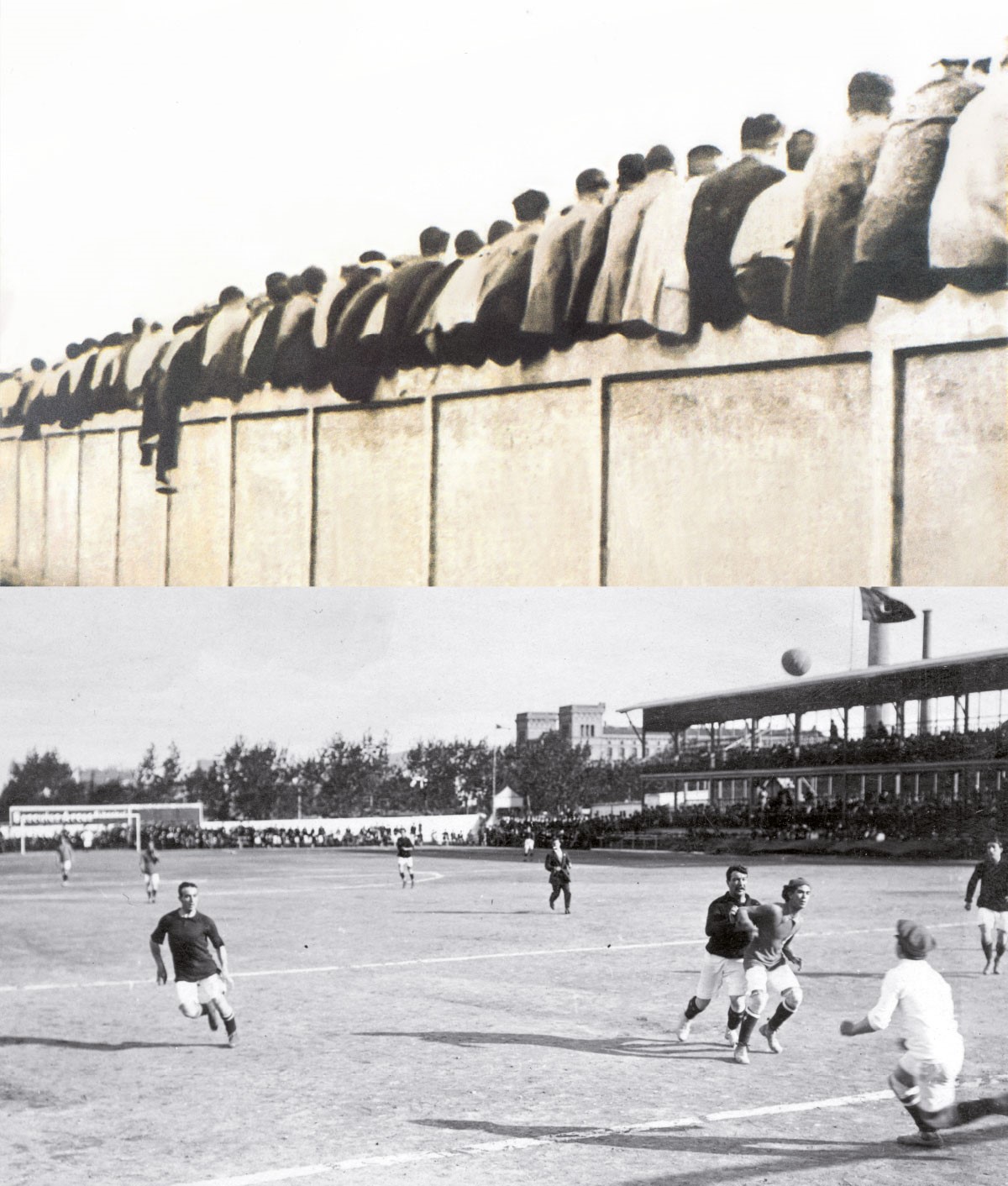
The origin of the word “culer” (the name given to Barça fans) goes back to when they used to sit on the wall of the pitch in calle Industria and those who passed underneath could only see their backsides.