Erotic art or pornography?
“That which is pornography to one person is the laughter of genius for the other.”
D. H. Lawrence
The term ‘Erotic Art’ is muddied by a miasma of ambiguous terms. Art and pornography, sexuality and sensuality, obscenity and morality are all involved to such an extent that it seems almost impossible to reach an objective definition, which is not unusual in the history of art. How is it possible to speak of erotic art?
This much is certain: the depiction of a sexual activity alone does not raise a work to the nobility that is erotic art. To identify erotic art only with its content would reduce it to one dimension, just as it is not possible to distinguish artistic and pornographic depictions only by describing their immoral contents.
The view that erotic works are created solely for sexual arousal and so cannot be art is erroneous as well. Does the creative imagination brought to erotic art distinguish it from pornography? Yet pornography is also a product of imagination.
It has to be more than just a depiction of sexual reality, however, or who would buy it? Günter Schmidt states that pornography is “constructed like sexual fantasy and daydreams, just as unreal, megalomaniacal, magical, illogical, and just as stereotypical.” Erotic daydreams–they are the subject of erotic art as well.
Those making a choice between art and pornography may have already decided against the first one. Pornography is a moralising defamatory term. What is art to one person is the Devil’s handiwork to another. The mixing of aesthetic with ethical-moralistic questions dooms every clarification process right from the start.
In the original Greek, pornography means ‘prostitute writings’–that is, text with sexual content–in which case it would be possible to approach pornography in a free-thinking manner and equate the content of erotic art with that of pornography. This re-evaluation would amount to a rehabilitation of the term.
The extent to which the distinction between art and pornography depends on contemporary attitudes is illustrated, for example, by the painting over of Michelangelo’s Last Judgment in the Sistine Chapel.
Nudity was not considered obscene during the Renaissance. The patron of this work of art, Pope Clement VII, saw nothing immoral in its execution. His successor, Paul IV, however, ordered an artist to provide the Last Judgment with pants!
Another example of the difficult relationship between society and erotic art is the handling of the excavated frescos of Pompeii which were inaccessible to the public until recently.
In 1819, the Gallery of Obscenities was established in the Palazzo degli Studi, the future National Museum where only people of mature age and known high moral standards had access to the locked room.
The collection changed its name to Gallery of Locked Objects in 1823. Again, only those with a royal permit were able to view the exhibited works. The reactionary wave after the unrest in 1848 also affected the erotic collection of the museum.
In 1849, the doors of the Gallery of Locked Objects were closed forever. The collection was transferred to a still further removed section of the museum three years later, with even the doors leading to that area being bricked up. Not until 1860, when Guiseppe Garibaldi marched into Naples, was reopening of the erotic collection even considered.
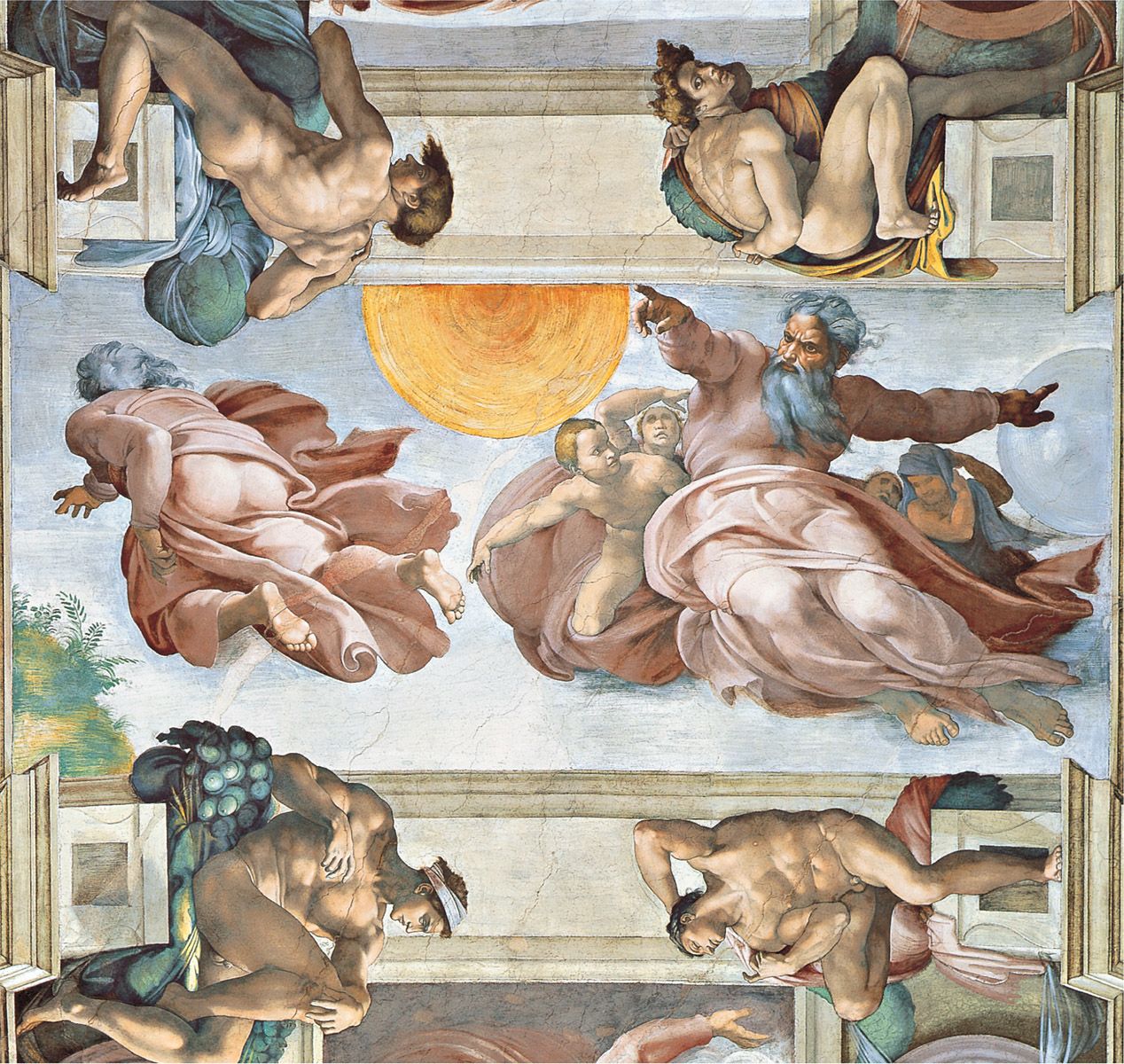
10. Michelangelo, The Creation of the Stars and the Planets (eigth panel of the vault), 1508-1512. Fresco. Sixtine Chapel, Vatican.
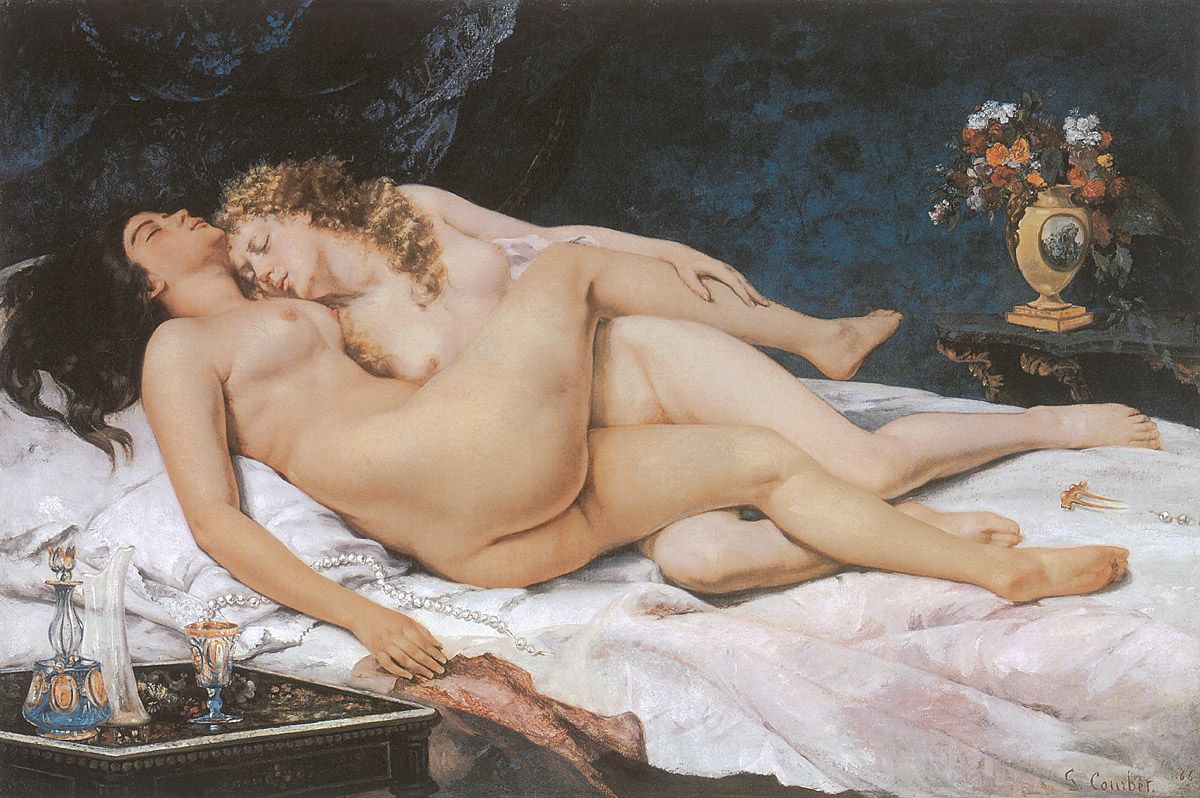
11. Gustave Courbet, The Sleep, 1867. Oil on canvas, 135 x 200 cm. Petit Palais-Musée de la ville de Paris, Paris.
The name of the collection was then changed to Pornographic Collection. Over time, many objects were removed from this collection and returned to the normal exhibits. The history of the Gallery thus provides an overview of the mores of the last three centuries.
Not every age is equally propitious for the creation of eroticism and its associated matters. It can even become its confessed enemy. For example, the libertine environment of the Rococo period created a very favourable atmosphere for eroticism and erotic art.
Erotic art, however, is not only a reflection of achieved sexual freedom; it can also be a by-product of the suppression and repression with which eroticism is burdened. It is even conceivable that the most passionate erotic works were created not in spite of, but rather because of, the cultural pressures on sexuality.
In nature, the instinct-controlled sexuality of animals is not erotic. In eroticism, however, culture uses nature. Whereas sexuality as an imperative of nature–even in humans–is timeless, eroticism is changeable: as culturally conditioned sexuality, it has a history. “Nothing is more natural than sexual desire,” writes Octavio Paz, “and nothing is less natural than the forms in which this desire expresses itself or finds satisfaction.”
Eroticism thus would have to be understood as a socially and culturally formed phenomenon. In which case, it is the creature of moral, legal, and magical prohibitions, prohibitions which arise to prevent sexuality harming the social structure.
The bridled urge expresses itself; but it also encourages fantasy without exposing society to the destructive dangers of excess. This distance distinguishes eroticism from sexuality. Eroticism is a successful balancing act that finds a precarious equilibrium between the cold flow of a rationally organised society–which in its extremes can also cause the collapse of the community–and the warm flow of a licentious, destructive sexuality.
Yet, even in its tamed versions, eroticism remains a demonic power in human consciousness because it echoes the dangerous song of the sirens–trying to approach them is fatal. Devotion and surrender, regression and aggression: these are the powers that still tempt us. The convergence of desire and longing for death has always played a big part in literature.
Insofar as eroticism consists of distance and detours, the fetishist constitutes the picture-perfect eroticist. The fetishised object, in its fixed, tense relationship with what is immediate, is more significant to the fetishist than the promise of fulfilled desires represented by the object. The imagined body is more meaningful than any real body.
Collectors are eroticists as well. While the lecher or debaucher is active in real life, the collector lives with a chaste heart in a realm of fantasy. And is it not true that the chaste heart can relish the delights of vice even more deeply and thoroughly than the unbridled debaucher?
Distance permits freedom. Art, too–which can also represent a fetishistic production for the artist–affords freedom. It affords the freedom to play with fire without being burned. It appeals to the eye; it allows toying with sin without having actually sinned.
This freedom through distance can be noted when observing the different reactions of viewers when looking at sex magazines and works of art: have you ever seen the viewer of a porn magazine smile?
A quiet cheerfulness, however, can be observed frequently in viewers of works of art, as if art brings forth an easing of the compellingly sensual. Those, however, who in a derogatory manner pronounce a work of art pornographic, prove nothing more than that they do not have any appreciation of what is artistic in the object depicted.
Turning away in disgust does not necessarily have to be a characteristic of a special morality. Such people have a non-erotic culture. Eduard Fuchs, the past master of erotic art, whose books were accused of being pornographic during his lifetime, considered eroticism the fundamental subject of all art: sensuality is said to be present in any art, even if its objective is not always of a sexual nature. Accordingly, it would almost be a tautology to speak of ‘erotic art’.
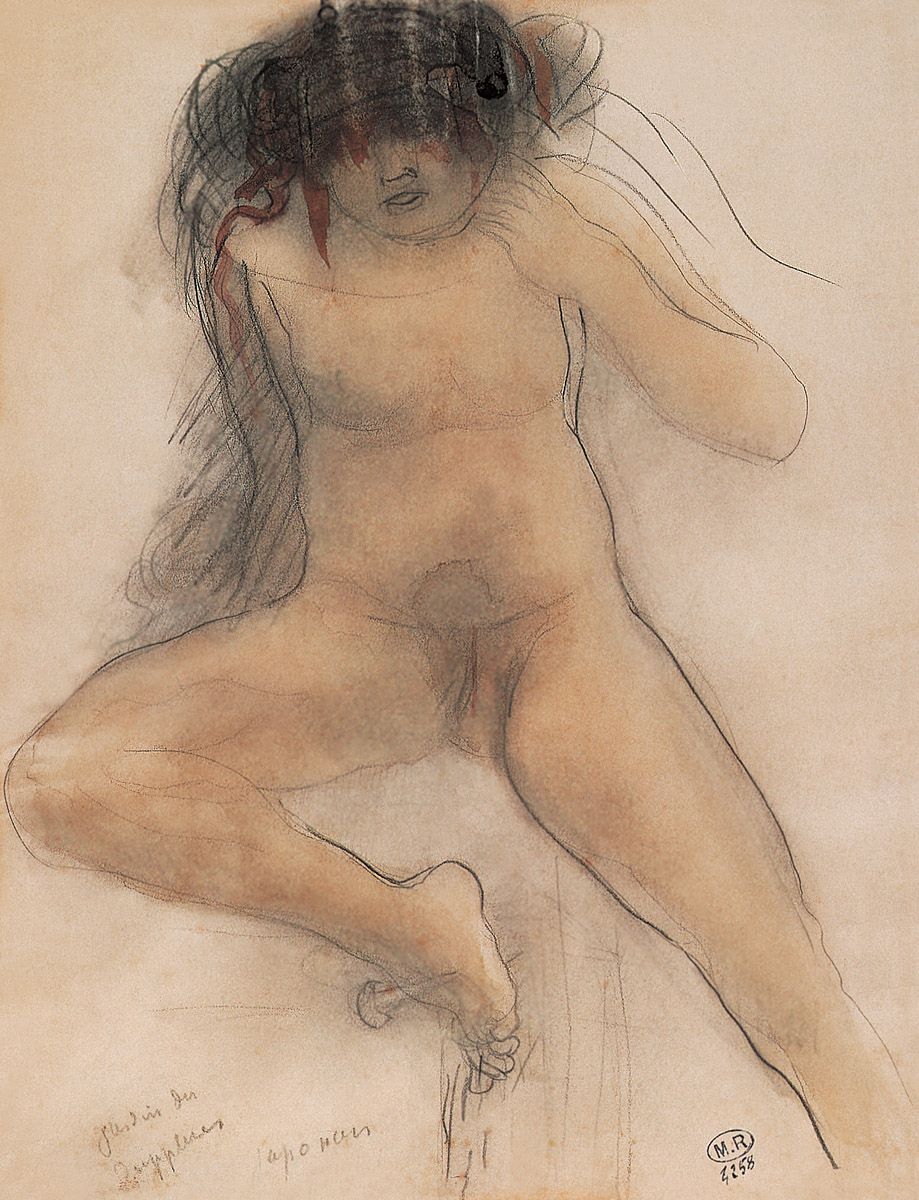
12. Auguste Rodin, Garden of Pain, 1898. Lead pencil, stump and watercolour on cream-coloured paper, 32.5 x 25 cm. Musée Rodin, Paris.
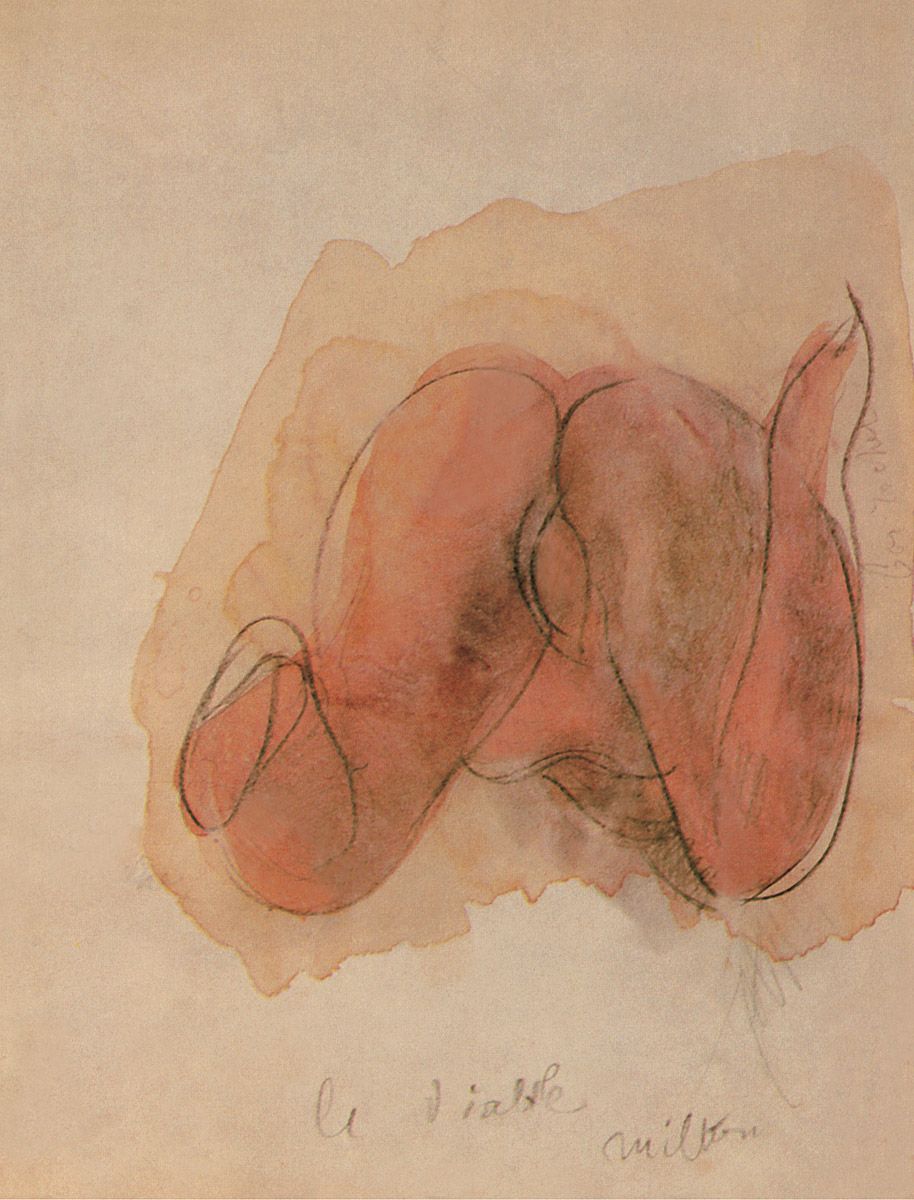
13. Auguste Rodin, Milton’s Devil. Lead pencil, stump, watercolour, gouache on cream-coloured paper, 32.7 x 25 cm. Musée Rodin, Paris.
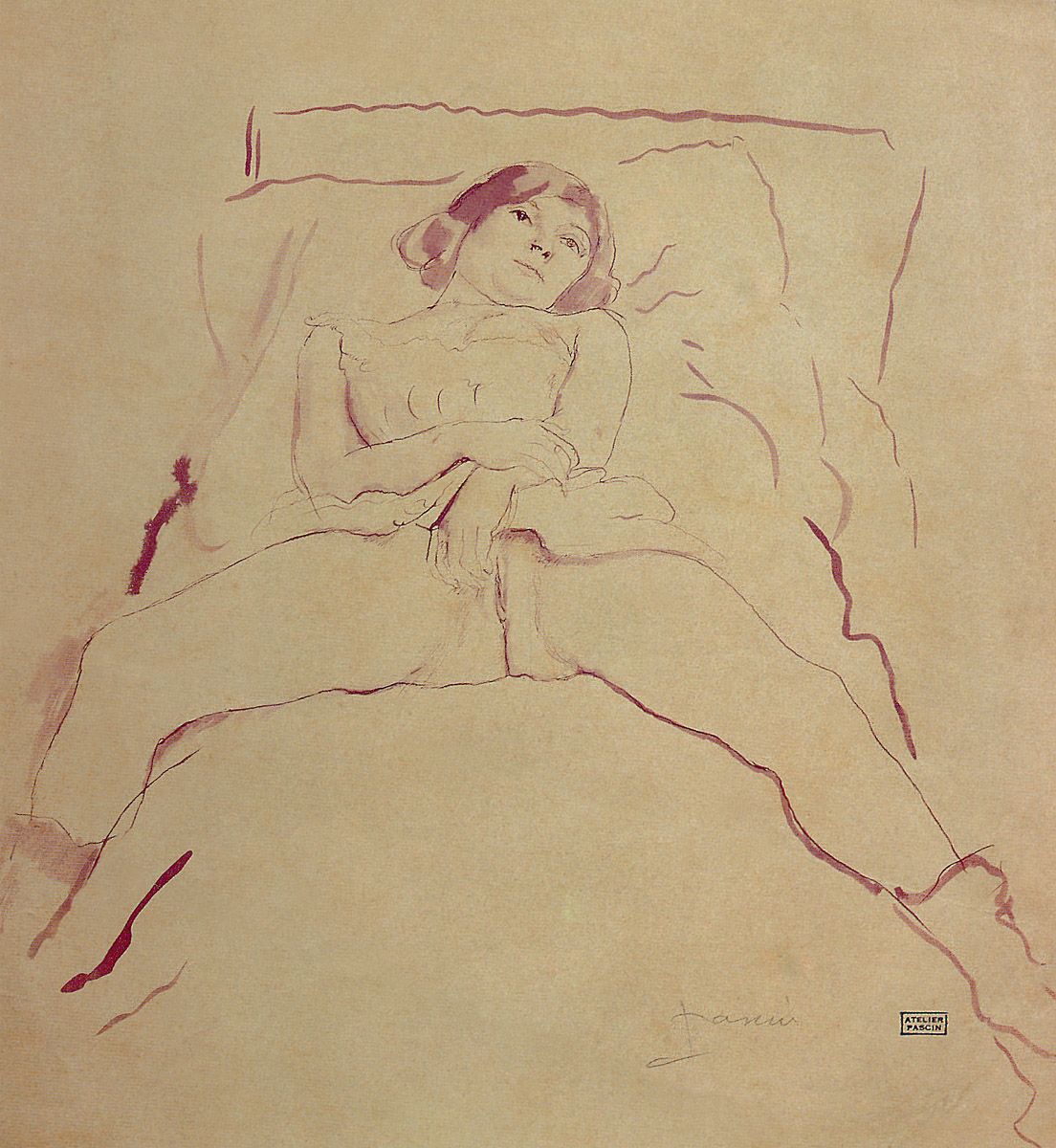
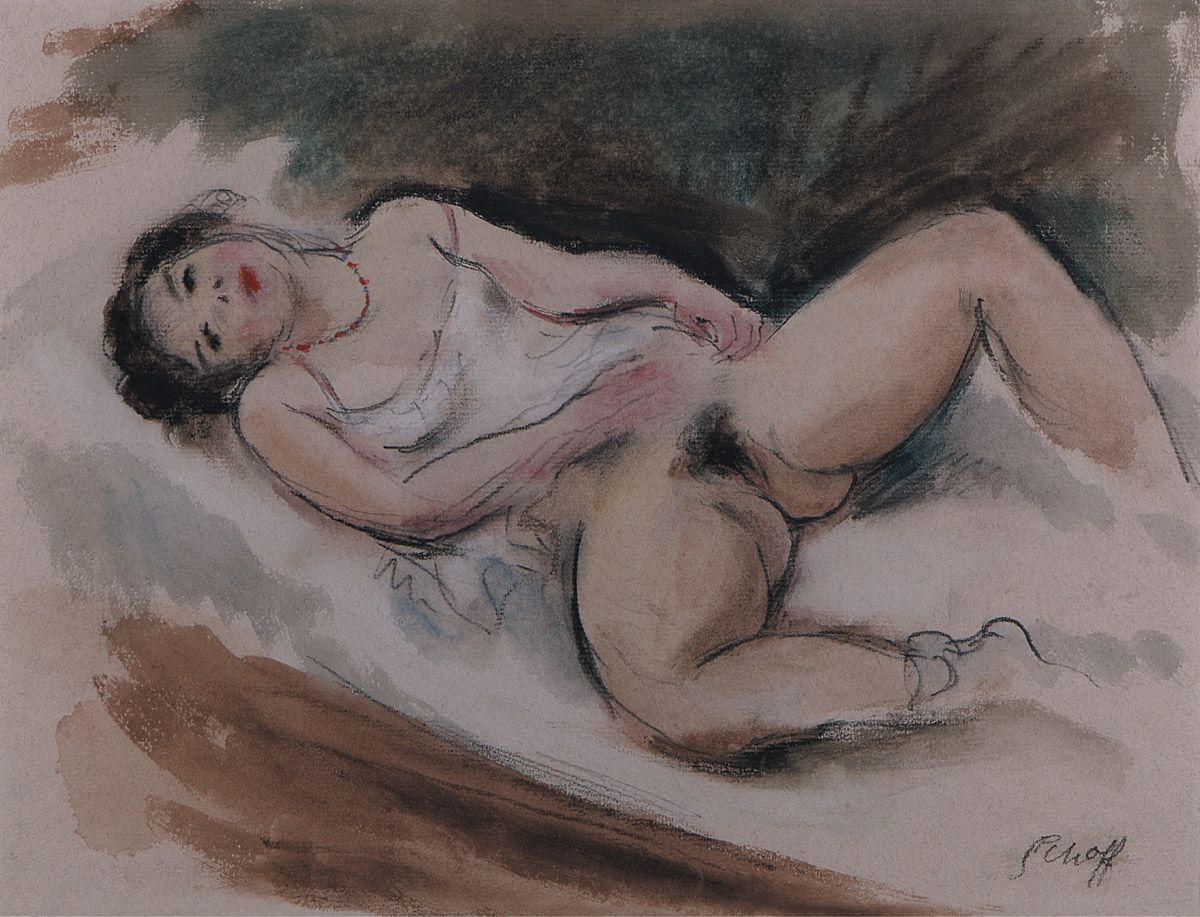
Long before Fuchs, Lou Andreas-Salomé had already pointed out the true relationship between eroticism and aesthetics:
“It seems to be a sibling growth from the same root that artistic drive and sexual drive yield such extensive analogies that aesthetic delight changes into erotic delight so imperceptibly, erotic desire so instinctively reaches for the aesthetic, the ornamental (possibly giving the animal kingdom its ornament directly as a bodily creation).”
Once, when Picasso, in the evening of his life, was asked about the difference between art and eroticism, his pensive answer was:
“But–there is no difference.” Instead, as others warned about eroticism, Picasso warned about the experience of art: “Art is never chaste; one should keep it away from all innocent ignoramuses.
People insufficiently prepared for art, should never be allowed close to art. Yes, art is dangerous. If it is chaste, it is not art.”
Viewed with the eyes of a moral watchdog, every type of art and literature would have to be abolished.
If spirit and mind are the essence of humanity, then all those placing the mind and spirit in a position opposed to sensuality are hypocrites.
On the contrary, sexuality experiences its true human form only after developing into eroticism and art–some translate eroticism as the art of love.
Matters excluded from the civilising process assert themselves by demanding a medium that is spiritually determined, and that is art.
It is in art that sexuality reaches its fullest bloom, which seems to negate all that is sensual in the shape of erotic art.
Pornography is a judgmental term used by those who remain closed to eroticism. It is assumed that their sensuality never had the opportunity to be cultivated.
These culturally underprivileged people–among them possibly so-called art experts and prosecuting attorneys–perceive sexuality as a threat even when it occurs in an aesthetically-tempered format.
Even the observation that a work has offended or violated the viewpoints of many still does not make it pornographic. Art is dangerous! Works of art can offend and injure the feelings of others; they do not always make viewers happy.
After all, is it not the duty of art to annoy and to stir things up? The bottom line: the term pornography is no longer in keeping with the times. Artistic depictions of sexual activities, whether they annoy or please, are part of erotic art.
If not, they are insipid, dumb works, even if harmless. The following essays examine the peculiarities of erotic art.
All viewpoints such as the art-historical or the one organised according to sexual science keywords, for example, cannot do erotic art any justice as long as eroticism itself is not the centre of the examination.
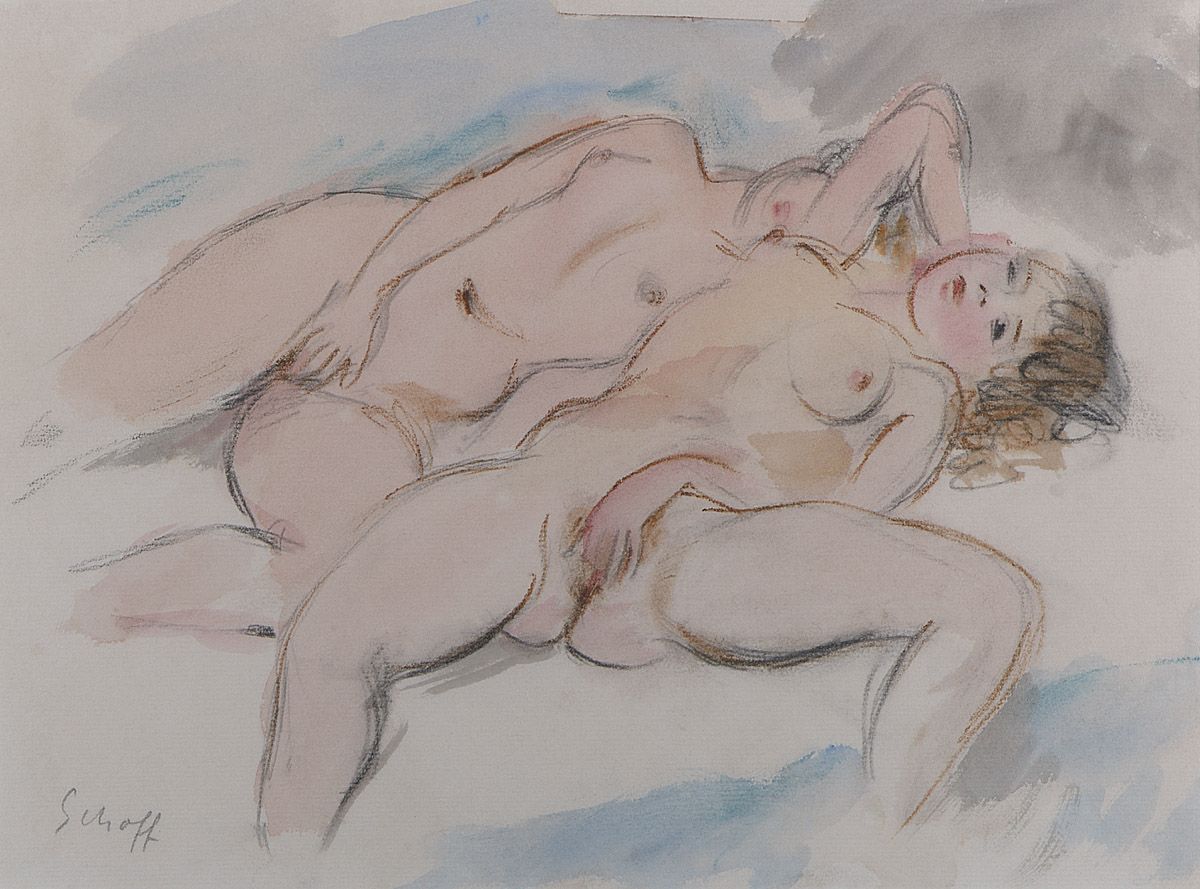
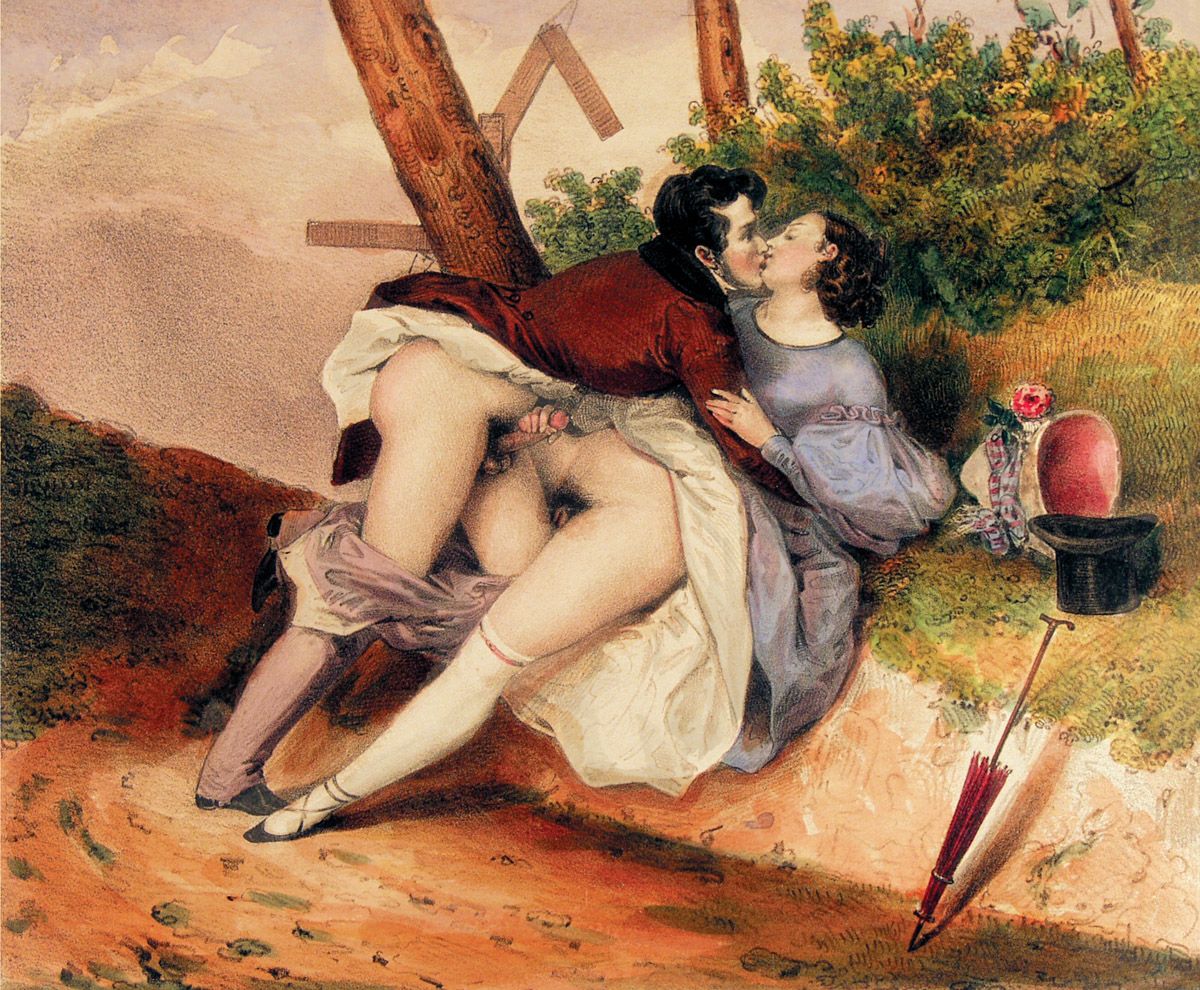
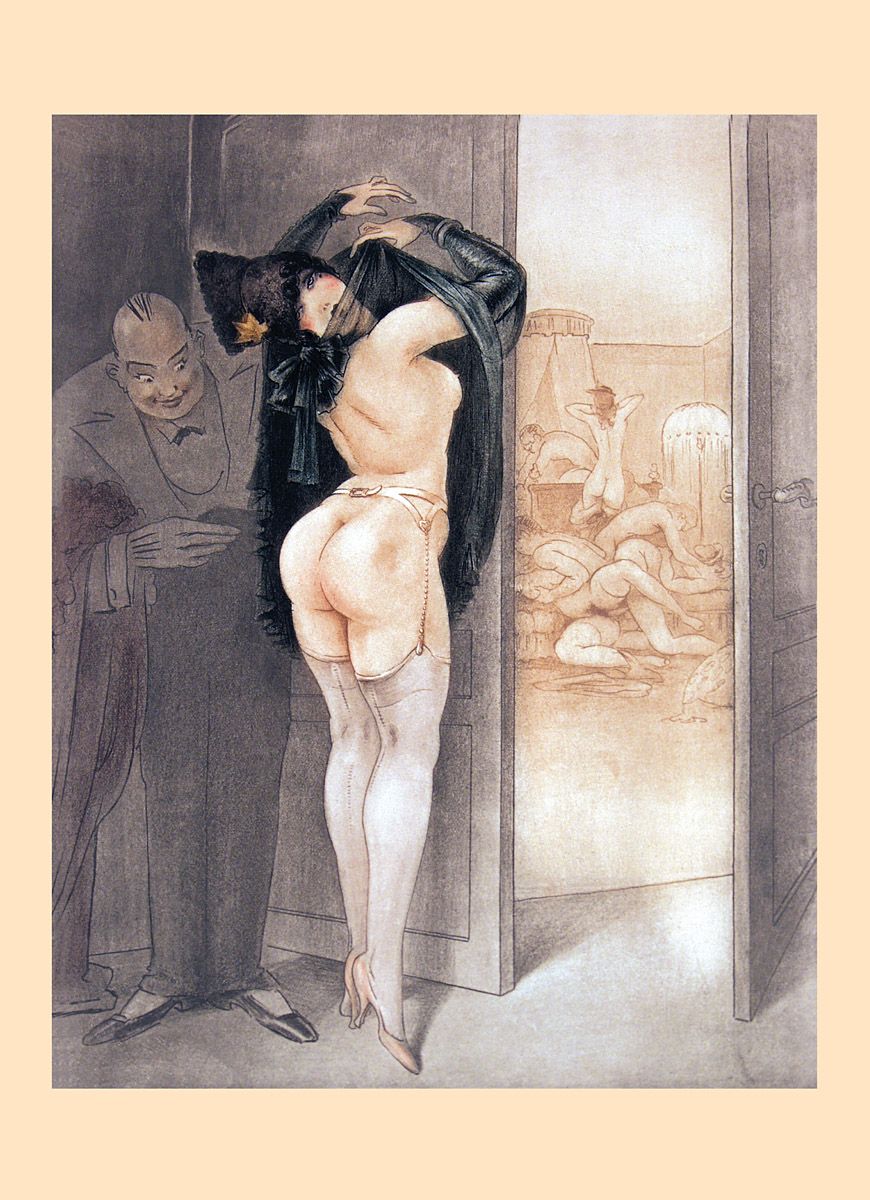
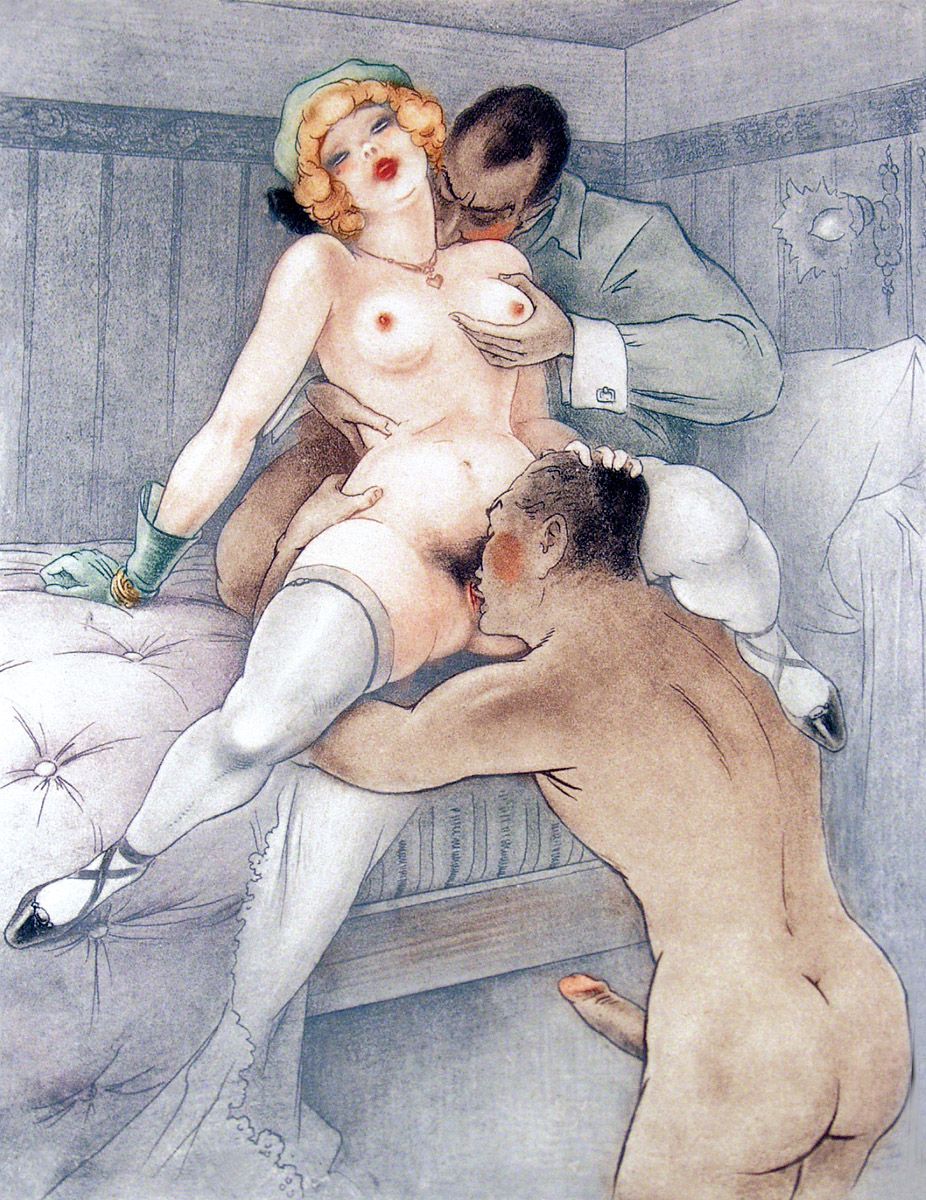
This means that these essays will broach subjects that are rarely the subject of discussion in the context of depictions of erotic art. They also provide arguments against the false defenders of erotic art.
The essay entitled The Dream about the Orgy emphasises the ultimate in sexual dreams, whether they occur at night or during the day.
Bataille’s term ‘excess’ finds its extreme form of expression in the orgy, insofar as all boundaries are abolished during erotic ecstasy.
A regressive maelstrom is exuded by eroticism and erotic art, which is curbed by culture through prohibitions, bans, and rituals.
The essay Eroticism and Indignation explores the question of which internal powers are expressed in erotic depictions, leaving the viewer to oscillate between horror and rapture. Here, art itself proves to be the creative, spellbinding power.
The essay illustrates that it is more the style and less the subject that determines the erotic character of a work of art. Indignation, so it is concluded, is a reaction appropriate for erotic works of art. We see pictures depicting wild excesses.
Only through our imagination are we taking part in the excess. The composition Pleasure for the Eyes shows that voyeurism represents a dissociated appropriation of that which is physical. Seeing is recognisable as a sort of substitute action.
The frame of a picture represents a demarcation line, which keeps the dangerous away from the real world. The Loneliness of the Picture pursues the thought that the chaotic and limitless nature of eroticism has to be poured into geometric forms to become acceptable. It is thus possible to keep our desires under control.
The basis of any museum foundation is a passion for collecting things. This passion itself is a deeply erotic activity, as the essay About the Erotic Roots of the Passion for Collecting Objects attempts to prove.
The collector of erotica is closer to the roots of the drive or urge than any other collector. The article Sodom Berlin introduces the Berlin of the 1920s as a throbbing cultural metropolis.
This era is particularly represented in the Erotic Museum in Berlin. The essay Negation and Erection is a tribute to the great Berlin artist George Grosz, whose works became the expression of an exile’s fate.
The last essay, May One Thousand Flowers Bloom!, re-examines the question why we have such a difficult time dealing with erotic art.
At the same time, this essay pleads for a responsible and mature way of dealing with it, in a democratic state acting with restraint.
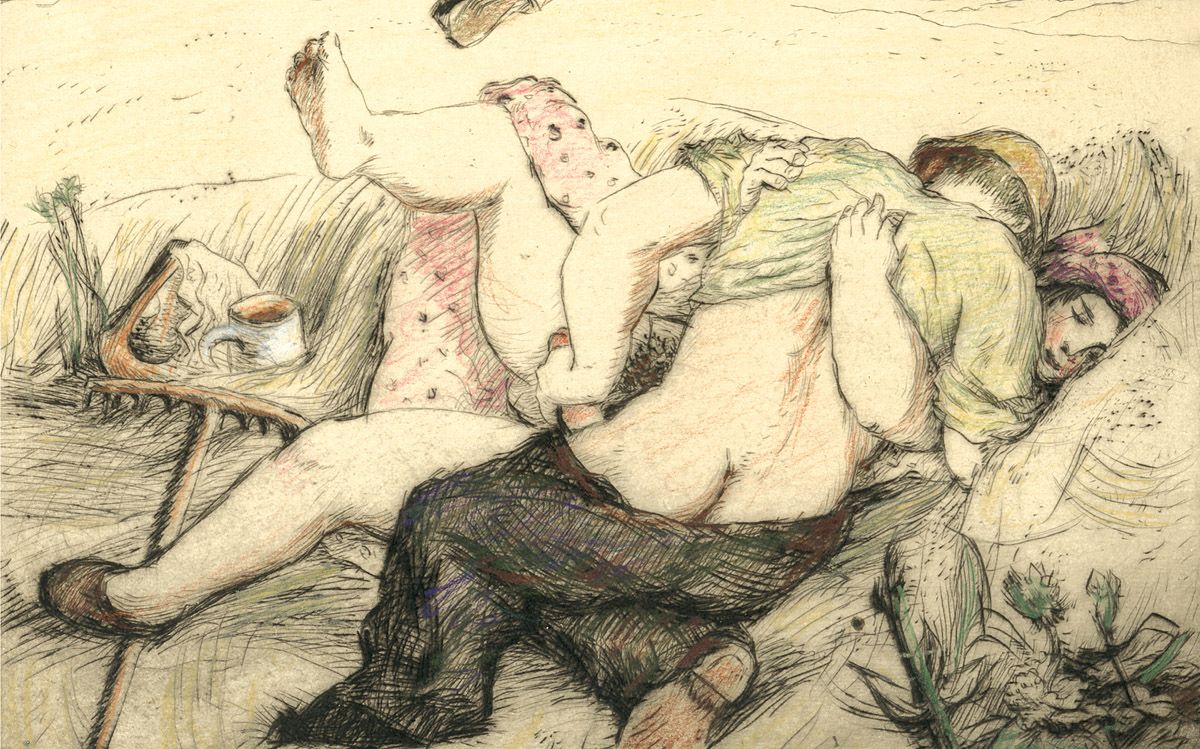
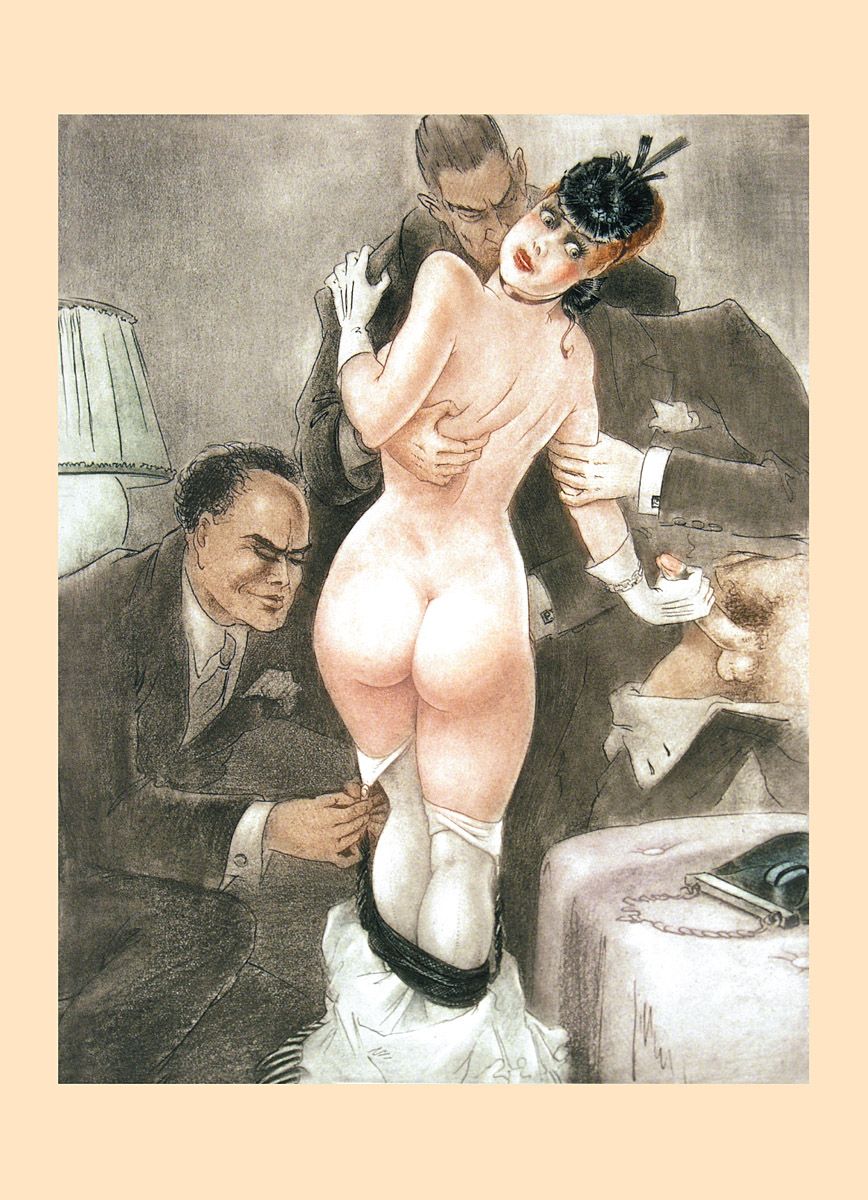
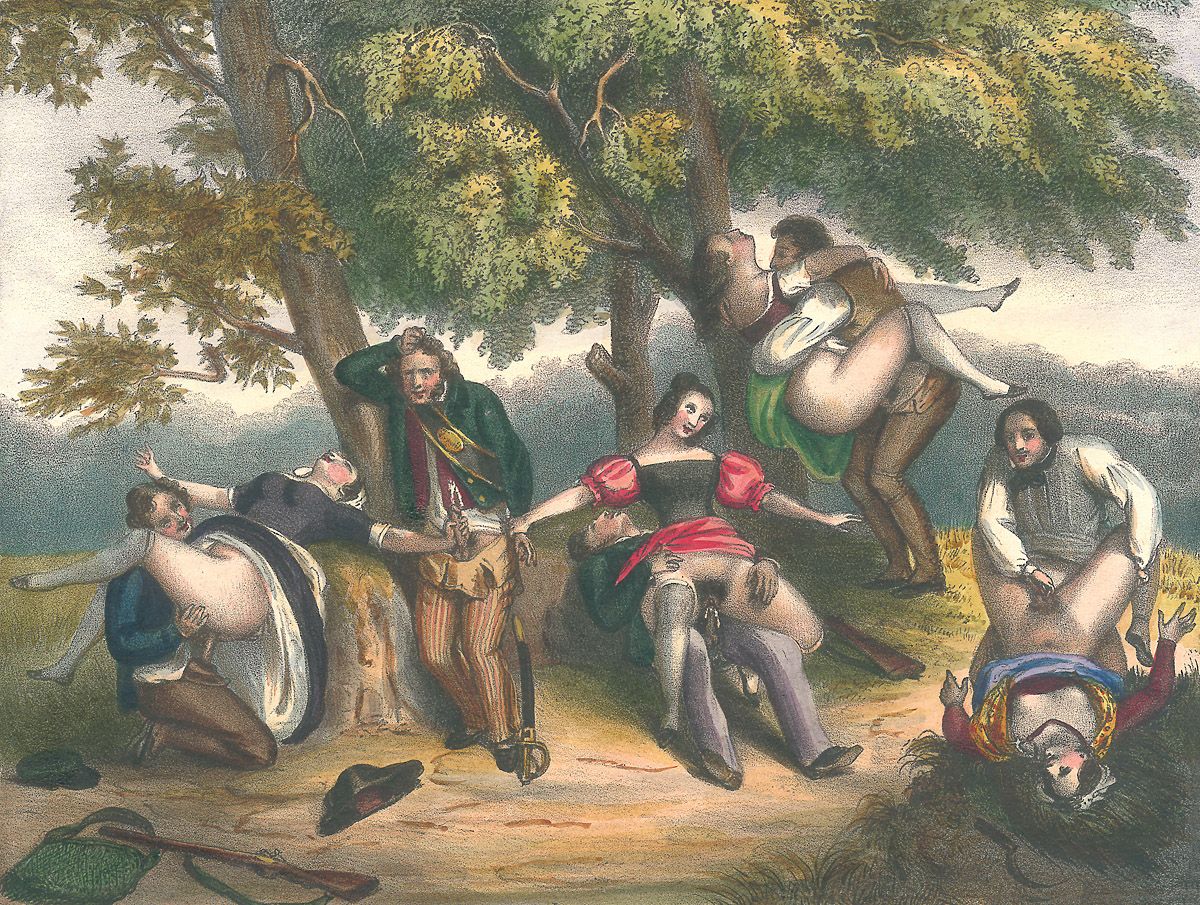
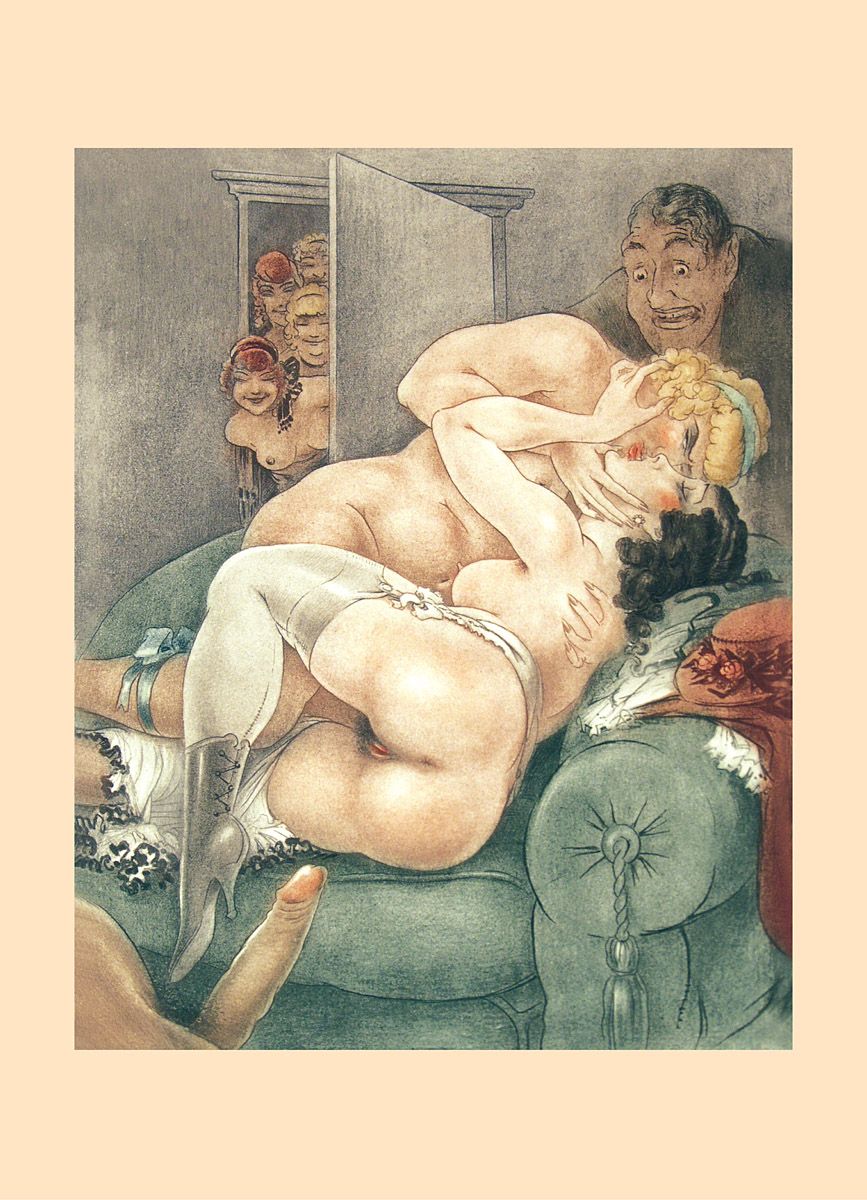
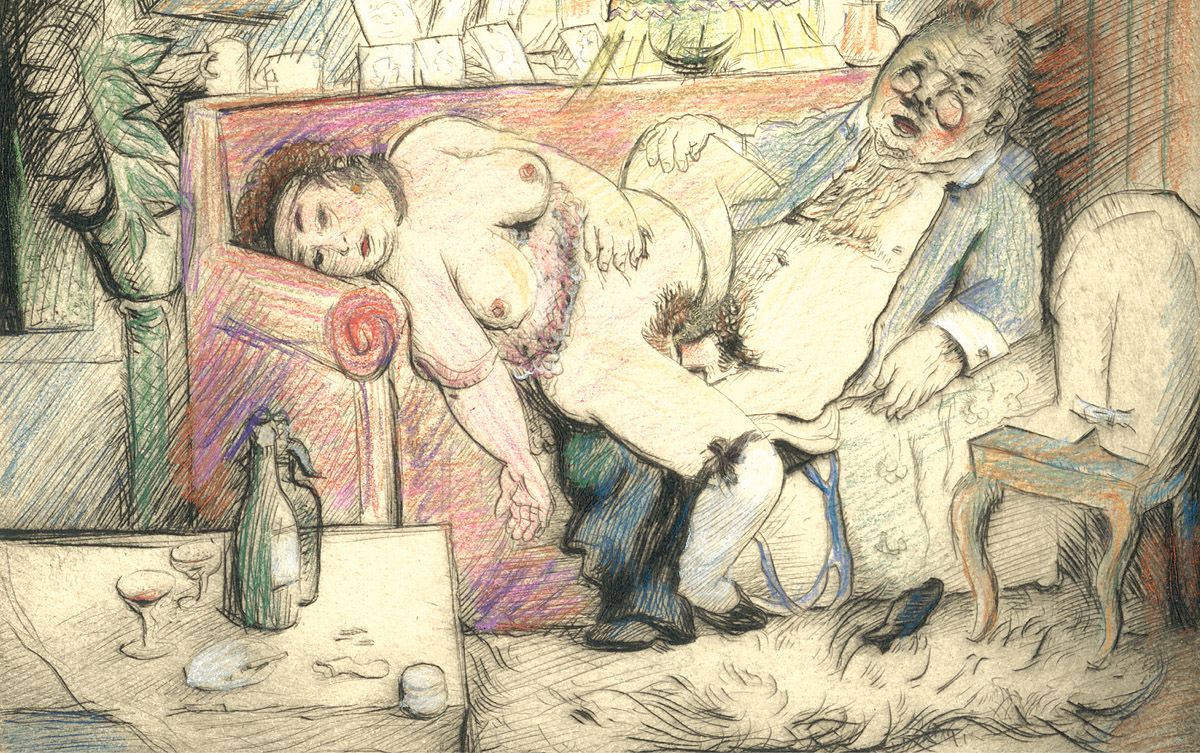
1665/66: Pierre de Bourdeille Seigneur de Brantome, Lives of the Gallant Ladies
Another type of person has corrupted girls severely; these are their teachers who have to teach them in the liberal arts and if they want to be bad they will be: anybody can imagine what type of comforts they are granted when they are teaching, alone in a chamber or when studying; anybody can think of the types of stories, fables, and histories they sometimes teach the girls to arouse their imagination and once they see this excitement and desire in these girls, how they know how to take advantage of the situation.
I once knew a girl who came from a very good and prosperous family, I tell you, who came to ruin and made herself into a whore because her teacher told her the story or actually fable of Tiresias who, after having tried both sexes, was asked by Jupiter and Juno to settle the dispute of who enjoys the most pleasure when copulating, man or woman?
He replied, contrary to Juno’s opinion, that this would be the woman. Juno was so upset about being told she was wrong that she blinded the poor judge, taking his eyesight. It is no wonder that this story tempted the girl, because she had heard from other women how crazy men were about sex and that they enjoyed it so much, but considering the judgment made by Tiresias, women can enjoy it even more and thus it should be tried, they say.
Really, girls should be spared such lessons! Are there no others? Their teachers, however, are apt to say that they want to know everything and since the girls are already studying, the passages and stories requiring an explanation [or those that are self-explanatory] have to be explained and told without skipping that page; and if they do skip the page, the girls will ask them why, and if they answer that they skipped the page because it would corrupt the girls they are then so much more eager to learn about that passage, and they start pestering their teachers to such a degree that they have no choice but to explain it to them because it is the nature of girls to want what is forbidden to them.
How many female students were corrupted by reading these types of stories, as well as with those by Biblis, Caunus and many others written in Ovid’s Metamorphoses, up to the book Ars Amandi, which he wrote?
In addition, there are many other risqué fables and lecherous speeches published here; French, Latin, as well as Greek, Italian, and Spanish.
And the Spanish saying goes: dear God, keep us from a horse that speaks and a girl that talks Latin.
God only knows, if their teachers want to be bad and teach their pupils such types of lesson, how they can corrupt and dirty them so that even the most decent and chaste among them will fall.
Is it not true that the holy Augustine was gripped by pity and pain when he read the fourth book of Aeneas, which contains the affairs and the death of Dido?
I would like to have as many hundreds of coins as there have been girls, worldly as well as pious, who have become excited, dirtied, and lost their virginity when reading Amadis de Gaule.
Anybody can see the damage Greek, Latin, and other books can cause when their teachers, these cunning and corrupted foxes, these miserable good-for-nothings with their secret chambers and cabinets in the midst of their laziness comment on and interpret these types of stories.