
2.2. Characteristics of brand equity
2.3. Perspectives of brand equity
”Don’t tell me how good you make it;
tell me how good it makes me when I use it.”
LEO BURNETT (1891-1971)
EXECUTIVE ADVERTISER
Now that the origin of branding is understood, this second chapter addresses the concept of brand equity, closely related to the concepts of brand and brand capital. Below is an analysis of the most relevant literature regarding the concept, its characteristics and the most relevant perspectives of brand equity.
The term “brand equity” began to be used at the beginning of the eighties without its meaning being clearly defined. It arose to counteract the excessive inclination that companies used to show to obtain short-term benefits, to the detriment of carrying out actions, such as advertising, whose effects are mainly long-term. Advertising agencies became accustomed to using the concept of brand equity to refer, in general terms, to the competitive advantages that in the medium and long term, companies could obtain from investments in commercial brands.
In the nineties, several marketing analysts based their discourse on historical motivations that generated value for brands. In this way, there were differentiations between motivations: (1) of a financial nature, generated through accounting objectives, mergers, acquisitions or disinvestments carried out by the company, and (2) marketing productivity, whose objective was to increase the efficiency of company spending. They considered that one of the difficulties that arises in the study of brand equity is related to the possibility of adopting different perspectives of analysis, which have to be considered as complementary rather than opposing.
Therefore, the term brand equity arose to try to justify the development of these advertising investments with a more complete and convincing argument than the one previously used to improve brand image. In addition, it was considered that the formulation of a framework that would integrate and relate several measures of brand equity would make it possible to use this concept as a tool for analysis and management. In parallel, academic research on this brand equity was acquiring a growing interest, being considered a line of priority research by the Marketing Science Institute. Thus, it was argued that three terms could be used interchangeably to refer to the same phenomenon: (1) brand asset, (2) brand value and (3) brand capital.
At the beginning of the 21st century, other experts argued that effective brand management is essential, and it would be a serious mistake to ignore the important role it plays in the development of long-term profit flows for companies, organizations and institutions. Thus, brand equity is considered an efficient and effective indicator to measure the success or failure of a product or brand, whose main characteristics are the value for the shareholder, the investor and the market. It is thought, therefore, that brand equity offers marketing managers a vital strategic bridge between the past and the future of a brand. It was emphasized that it is a construct composed of several components: (1) willingness to pay a higher price for the brand, (2) satisfaction with the experience of the brand, (3) loyalty towards the brand, (4) the perceived quality of the brand and (5) identification of the brand with the consumer.
Later, various issues related to brand equity based on the customer's lifetime value and how companies allocated their marketing budget to consumer acquisition and retention efforts were explored. Although it was thought that some marketing observers had minimized the challenge and value of strong brands to put an excessive emphasis on the perspective of customer value, for example, arguing that our attitude should be that brands come and go but the client must endure. However, as indicated by Keller, Apéria and Georgson in 2008, this statement can easily collapse before a logical, but contrary conclusion, based on the fact that over the years customers can come and go, but strong brands will remain. Perhaps the key point is that both are essential and that the two perspectives can help improve the marketing success of a company. In addition, brand equity arises according to the relationships that the company has with the client, considering that a large number of organizations implement customer relations marketing programmes to improve their interactions with them. Thus, researchers encouraged companies to formally define and manage the value of their customers.
At present, it is considered that the valuation of the brand configures a common language around which a company must be promoted and organized. Thus, the performance of a brand can be measured through a series of factors, which will be assigned to the different functions of the company, building commitment and a sense of brand responsibility throughout the organization. In addition, more and more, chief executive officers (CEOs) are paying attention to how their companies communicate their brands to investors, playing a very important role to boost the performance of the company.
Along with this, and in an attempt to measure brand equity, important consultants publish various rankings. Among them, The BrandZ report: top 100 most valuable global brands 2017, by Millward Brown stands out, which ranks the 25 most prestigious brands (see Figure 2.1). It should be noted that the company specializing in finance and return on brand investment self-defines its report as the only one that combines consumer research with public financial databases to measure the contributions that brands make to society. Furthermore, it is the only ranking that quantifies consumer sentiment about brand impulse and its future projections, and is the first to focus on the market brand, as opposed to those focused on corporate brands.
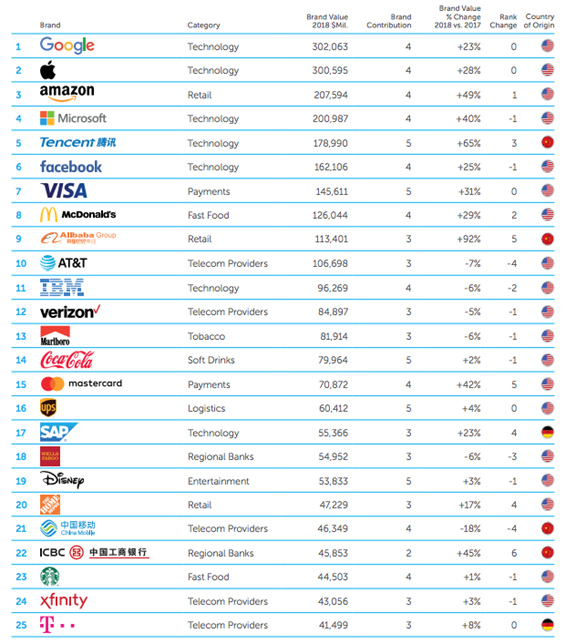
Figure 2.1. BrandZ™ Top 25 Most Valuable Global Brands 2018.
Source: http://www.millwardbrown.com/brandz/top-global-brands/2018
As a conclusion to this section, the term brand equity has been used since the eighties, in search of justifying the development of advertising investments, as well as counteracting a certain entrepreneurial inclination towards obtaining short-term benefits. All this, added to the current work of consultants and companies of recognized world prestige that generate rankings of firms, permits the configuration of a common language for all companies in order to organize themselves to build powerful brands.
In the nineties, researchers such as Srivastava and Shocker positioned themselves through a criterion for estimating brand equity based on three factors: (1) marketing activities: based on the product, the elements of the brand, the distribution channel and decisions regarding price and communication; (2) consumer perceptions: based on the degree of knowledge about the brand and the image it has; and (3) advantages for the company: based on brand performance, its stability, growth potential and financial value. Thus, the definitions of brand equity proposed by academics in the area converge on the fact that the brand creates value for the company through the effect it has on consumers (see Figure 2.2).
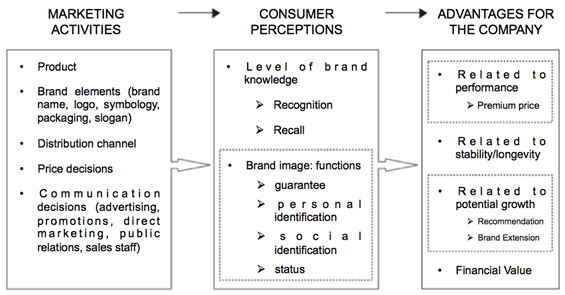
Figure 2.2. Criteria for estimating brand equity.
Source: Srivastava and Shocker (1991)
In the new century, other marketing observers supported such research, considering that brand equity provides benefits to two types of public: (1) the company and (2) the consumer, based on the efforts of brand building and the dimensions of brand equity. Webster considered both types of public and argued that the generation of brand equity can be built through four differentiated channels (the first three belonging to the company and the last to the consumer), each one of them generating benefits:
1. The producer: higher sales volumes, lower production costs, ease of introduction of new products, relationship of trust with the consumer and greater control over vendors.
2. The wholesaler: pre-established demand, lower sales costs, higher sales volumes, greater inventory turnover and better use of warehouses.
3. The retailer: pre-established demand, improvement in the image of the distributor for the consumer, commitment of the producer to promote the product, relationship of trust with the customer, higher margins on stronger brands, greater turnover of inventories and lower sales costs.
4. The consumer: implicit quality guarantee, lower perceived risk and prestige associated with the brand image.
Therefore, a strong brand is a source of income, which produces the following benefits: (1) increase in commercial margins, (2) higher pricing, (3) improvement in product identification and the possibility of repeat purchases, (4) increased ability to differentiate products from competitors and (5) better segmentation, since a company can create different brands for different groups of consumers.
Financial evaluation has little relevance if the underlying value for the brand has not been created, or if the managers do not know how to exploit this value through the development of profitable brand strategies. That is, the valuation of the brand serves to assess the degree of knowledge that the consumer has about it and involves developing marketing strategies by the company. Therefore, brand measurement and tracking over time, and even across borders, are essential to effectively manage and control brand equity and, consequently, achieve one of the best competitive advantages of any company.
Thus, a brand is something that is created little by little, with a lot of effort, which requires continuous management and work to maintain it. That is, understanding brand equity can help develop marketing strategies. Therefore, those responsible for marketing in companies should improve their knowledge of consumer behaviour, as a basis for making better strategic and tactical decisions. Consequently, the knowledge and analysis of brand equity can, and should, be applied to determine the alignment between brand activities and management.
Later, Hoeffler and Keller argued that the creation of brand equity on a global scale is marked by the benefits of its strength, based on terms of brand familiarity (brand awareness), brand knowledge (favourable, unique brand associations, as well as a high quality brand) and brand performance (leader in market share). This plays a very important role on two levels, which are:
1. Consumer behaviour: greater attention and learning is generated (consideration of purchase and selective attention), interpretation and evaluation (direct or indirect), choice (heuristic) and post-purchase satisfaction (evaluation of extension and satisfaction).
2. Differential marketing efforts: in relation to the product (more favourable attributes, perception of benefits and greater preference to offers), brand extensions (most favourable consumer response and most effective marketing programmes), the price (favourable consumer responses to price increases or decreases) and brand communications (greater attention, more positive reaction and retention of more information). That is, it seeks to generate differentiation in brand and market value.
Recently, a group of academics has argued that the valuation of brands is a process that is divided into nine factors:
1. Brand management and development: helps to carry out the brand's SWOT analysis, analyses what the target audience should be, determines the volume of resources to manage the brand and detects shortcomings in the strategy to add value to it.
2. Benchmarking: evaluates the premium price of the brand and its competence, helps to understand the positioning of the company and favours the development of strategies to fight against the competition.
3. Brand monitoring: allows an analysis, year after year, of the value of the brand, its market share and its contribution to the overall benefits of the company.
4. Brand control: provides strategic information to rationalize the brand portfolio, since it shows which are strong and which are weak.
5. Brand licence: contributes to decisions on prices and royalties in brand and franchise licensing operations.
6. Mergers and acquisitions: provides information on the value of the intangibles of the company associated with the brand but not incorporated in the financial and accounting statements.
7. Negotiations of joint ventures: facilitate the pacts regarding the creation of business associations when these involve the shared use of brands.
8. Brand dilution evaluation: useful for legal disputes. It helps to determine, in monetary terms, the negative effect that actions such as falsifications and improper uses of trademarks have on the brand.
9. Presentation of endorsements: permits evaluation of the level of endorsement available to the company before financial and credit institutions.
There are two general motivations that have historically focused interest on the valuation of brands: (1) financial: that seeks to estimate brand equity in the most precise way, whether with an accounting objective, that is, incorporating said value to the valuation of the assets that appear on the balance sheets, or for the purpose of making mergers, acquisitions or divestments made by the company; and (2) improvement of marketing productivity: whose objective is to increase the efficiency of the expenses of said area and of the company.
As a conclusion to this section, with regard to the main contributions on the characteristics of brand equity, it is worth noting that brand managers must improve their knowledge of consumption patterns as a basis for making better strategic and tactical decisions. Therefore, the generation of brand equity must be carried out through the different channels that the company has, either through manufacturing, distribution, sales or post-purchase service.
In an attempt to focus and shed light on the concept of brand equity, the literature offers three main perspectives: (1) financial or company-based brand equity, (2) consumer-based brand equity and (3) global or mixed brand equity. Following Gardner and Levy, Figure 2.3 shows the different perspectives discussed.
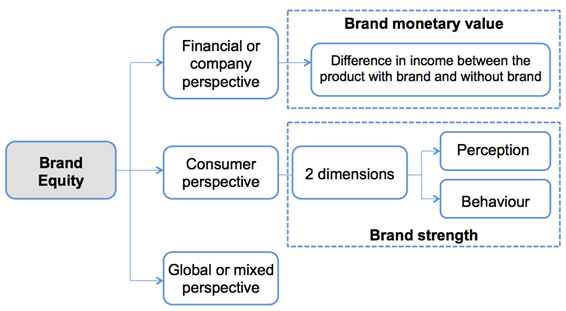
Figure 2.3. Perspectives of brand equity.
Source: The author following Gardner and Levy (1999)
As can be seen, brand equity has two aspects of research: (1) the financial point of view, based on the difference in income between products with and without a brand, and (2) the consumer's point of view, based on perceptions and behaviour, which create brand strength. To this is added a third aspect, (3) which unites both perspectives and is called a global or mixed perspective. Each of them is detailed below.
Considering the financial-based brand equity perspective or focusing on the company, we can see that to date there have been very few publications that have dealt with establishing a conceptual framework about the background and consequences of brand equity from this viewpoint. Even so, it may be considered that the financial perspective came from the hand of the Australian businessman Rupert Murdoch in 1984, when he ordered an estimation of the value of the brand of the newspapers and magazines published by his firm to include on the balance sheet.
Following more recent research, it is considered that the financial-based brand equity perspective measures brand equity at the firm level, through various forms, such as: (1) the increase in cash flow, (2) market share, (3) premium price, (4) the equity of the brand, (5) the price of the shares and (6) brand exchange. Along with this, three major concepts can be identified: (1) preference and purchase intention, (2) increase in brand choice and (3) higher profit margins. Next, each of them is analysed.
Firstly, brand equity maximizes purchase preference and intention. Thus, an increase in brand recognition increases the likelihood that the brand is part of the group of brands that receive purchase consideration. It is worth noting that there is a relationship between brand equity and market power, since high brand equity represents an important competitive advantage, as it allows the company to reach high levels of differentiation, which translates into resistance against the promotional pressure of competitors and the creation of strong barriers to entry.
On the other hand, in products or services with a decision process of low involvement, the minimum level of brand recognition may be sufficient for choice. Likewise, strong brand equity creates brand loyalty, that is, it allows the company to build a stable long-term demand, which implies greater security for the generation of future cash flow, which in turn insulates the brand from possible competitive threats. Three factors stand out as an expression of the creation of brand equity for the company: (1) potential to achieve the objectives, (2) potential support and retention and (3) possibility of adjusting the network of brand associations to a pattern of future success.
Therefore, brand equity has a positive influence on the financial results of the company, not only present, but also future ones. Thus, the provision of strong brand equity influences preference, and consumer’s purchase intentions increase the likelihood of brand choice and, usually, permits the generation of higher profit margins. In addition, a strong brand allows for additional income through the establishment of brand alliances (co-branding), which is related to its capacity to diversify and enter new markets. In particular, it is thought that brand alliances limit the risk of entry into new product categories.
Secondly, brand equity permits the generation of an increment in the choice of the brand. In this sense, the value of a brand is the monetary value derived from the degree to which the brand name favours the transactions or exchanges, current and future of the company with its customers. Thus, we can specify, the number of years that the brand has been in the market, its order of entry, the cumulative advertising investment and the current relative share in advertising expenditure in the sector as antecedent variables.
Some researchers consider that the value of a brand is the additional value that the company attains, above the value of its material assets, due to the position its brand has in the market and the possibility of extending it to other product categories and/or markets. Thus, and as regards a possible brand extension, the value of the original firm will help the extension of the line to improve its image and consideration by consumers and distributors. This activity is increasingly important, due to the increase in the costs of developing new products and the high degree of failures during their introduction. Although it is appropriate to avoid the risks associated with improper use, since poor brand extensions can erode the value of the original firm.
Thirdly and finally, brand equity permits the generation of higher profit margins for the company. Thus, various researchers assimilate the value of the brand with the monetary value of the future benefits expected from it. The value of the brand is the difference between the cash flow obtained by a product with a brand and the resulting cash flow in the event that the same product was sold without a brand. The relationship between the monetary value of the brand and the value corresponding to the shareholders of the company is analysed.
Motameni and Shahrokhi consider that brand equity is defined as increases in cash flow that branded products accumulate compared to unbranded products. Brand equity based on the financial point of view must contain five key elements: (1) price per share, also called stock price, (2) future cash discounts, (3) the influence of the value of the brand on the rest of the assets of the company, (4) the premium price that the brand holds over the competition’s products and (5) the price of the shares reflected in the marketing decisions taken. In the case of those companies that are not listed on the stock exchange, brand equity based on the financial perspective would be generated through discounts in future cash flow, the value of the rest of the company's assets and the premium price of the products offered by the brand.
Therefore, the role of the brand seen as a business asset is capable of affecting the cash flow of the company, the value of its shares and/or its sale price (in the cases of acquisition, absorption or mergers with other entities). In this way, to analyse brand equity, an economic approach is adopted, in terms of additional benefits obtained by the company due to marketing its products with a certain brand.
To sum up, Figure 2.4 outlines the main contributions found in the literature on the creation of value for the company. Concluding this section, the main contributions of the concept of brand equity from a financial perspective or focused on the company are considering the brand to be an asset and, thereby, have an impact on increasing market power, income and future profits.
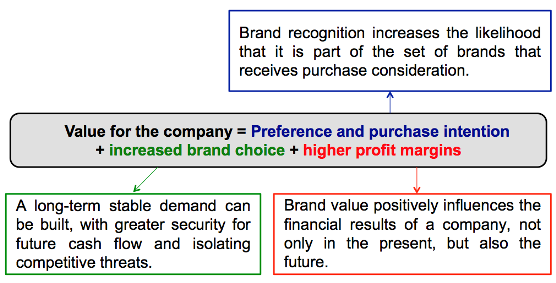
Figure 2.4. Creation of value for the company.
Source: The author
Considering the consumer-based brand equity perspective, it is affirmed that a brand will generate competitive advantages and, consequently, value for the company as long as it contributes value to a substantial target audience. Therefore, various marketing experts propose determining brand equity through perceptions (attributes, benefits and attitudes), preferences and/or consumer behaviour towards the brand. Thus, three major concepts can be identified: (1) interpretation of information, (2) confidence in the purchase decision and (3) satisfaction in use / consumption. Next, each of them is analysed.
Firstly, brand equity generates a specific type of interpretation of information by the consumer. Kamakura and Russell argue that brand equity should be related to the differential effect that consumer knowledge has on the brand's response to marketing activities. The authors consider that brand equity based on the consumer must have five characteristics or key elements: (1) the degree of affinity of the brand with the consumer, (2) its associations, (3) the client’s knowledge about the brand, (4) the perception that the consumer has of the brand and (5) associated behaviour.
It is considered that brand equity is a construct composed of several components: (1) the willingness to pay a higher price for the brand, (2) satisfaction with experience of the brand, (3) brand loyalty, (4) perceived quality of the brand and (5) identification of the brand with the consumer. It should be noted that the degree of affinity that the consumer has with the brand, as well as the mental associations that can be generated with their lifestyle, could be considered the most important variables of said marketing perspective. However, the rest of them also influence very positively (knowledge, perception and behaviour), although to a lesser degree.
Keller adopts a brand equity approach from the point of view of the consumer in order to understand how this value is created and developed. Specifically, he points out that the value of the brand represents the differential effect that the knowledge of the brand name exerts on its response to marketing actions. That is, the value is positive if the answer regarding perceptions, preferences or behaviour is more favourable than it would be if the product were sold with a fictitious or unbranded name, and vice versa. Today, the correlation of the attitude of the consumer to the brand is upheld, and the extension of the brand is the most important factor in the consumer’s perspective, mainly based on its participation in the market.
Secondly, brand equity generates confidence in purchase decision-making. It is considered that an increase in recognition increases the likelihood that the brand will be part of the group of firms that receive purchase consideration, since there seems to be a decision rule for consumers that encourages them to only adopt well-established and known brands.
Therefore, it is established that brand equity can play an important role in the consumer decision process. In this sense, the brand contributes value to the consumer in terms of processing and interpreting information, confidence in the decision to purchase and satisfaction in use. That is to say, the way in which brand equity is based is a wealth of information that can be used in a heuristic way by the consumer to simplify their decision-making.
This information develops slowly within each user and constitutes multiple concepts of a brand in their mind. Therefore, in the literature it is held that brand equity is a multi-attribute concept. Thus, the value of a brand is described according to the function it performs as a signal of information capable of reducing the cost of searching for information and the risk associated with the purchase of a product by the consumer.
More recently, several marketing experts explain that the consumer's perspective is based on brand awareness, referred to as the force with which the brand is present in the consumer's mind, and this occurs when there is an association between the brand and the class of product, when the potential customer recognizes or associates the brand as a member of a certain class of product. Therefore, the consumer believes in the brand and this contributes to reducing the effort required to choose a good product, the perceived trust reducing the perceived risk.
Thirdly and finally, brand equity generates satisfaction in the use/consumption. Thus, brand equity is born from the value that a consumer gives to a brand with respect to others that offer similar products in the market. This, therefore, translates into consumer loyalty and predisposition to pay a higher price for the acquisition of some of their products. For example, a study carried out in 1995 by McKinsey & Co., together with Intelliquest Inc., revealed that consumers only buy products from a brand that they consider of inferior value when they are on offer (for example, Packard Bell), while they do not mind paying a higher price for those they consider to have a strong value (for example, IBM).
Some marketing observers argue that a strong brand equity implies, from the point of view of the consumer, common values between it and the brand, such as, for example, size, superior quality, differentiation, identification with the product and affinity towards the brand. In addition, the creation of value for the client favours the creation of value for the company, which improves, among other things, the efficiency and effectiveness of marketing programmes, customer loyalty, prices, margins and distribution.
Finally, it is noted that the brand brings benefits related to self-realization (located in the noble zone of the hierarchy of human needs pyramid proposed by Abraham Malow in 1943), which is related to consumer satisfaction, as you are using a brand, you can be convinced that you are using the best product, and feel satisfied and completely fulfilled for that reason.
Figure 2.5 shows a summary of the main contributions found in the literature on the creation of value for the consumer. As a conclusion to this section, and based on the main contributions on the creation of value for the consumer, it should be noted that brand equity can offer the target audience high fidelity indices, changes in purchasing behaviour patterns, knowledge, security and even self-realization.
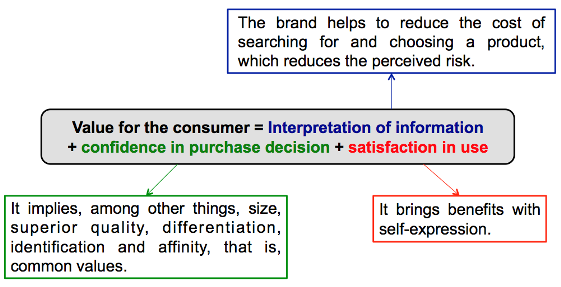
Figure 2.5. Creation of value for the consumer.
Source: The author
Examining the global-based brand equity perspective (also called “mixed-based brand equity perspective”), and considering that it encompasses the two previous perspectives (financial and consumer), three major concepts can be identified: (1) a business approach, (2) a consumption approach and (3) an approach equidistant between business and consumption. Next, each of them is analysed.
Firstly, several marketing observers focused their studies related to the global-based brand equity perspective, emphasizing the entrepreneurial approach, although they also took the consumption approach into account. Farquhar considers brand equity to be a fundamental concept in both business practice and academic research, as marketing experts can obtain competitive advantages through powerful brands. In addition, the competitive advantage of the firms that have strong brands allows them to have the opportunity to generate extensions of brands successfully, resistance against promotional actions of current competitors and barriers to new rivals entering the market. Aaker argues that brand equity reflects how consumers think, feel and act about the brand in terms of prices, market share and the profitability that it generates for the organization.
Secondly, several researchers focused their studies on the global-based brand equity perspective, emphasizing the consumption approach, although they also considered the business approach. Blattberg and Deighton think that brand equity is based on the value of the customer, through the optimal balance between what marketing managers invest in the client's acquisition and what they spend on their retention. Thus, it is calculated by first measuring the expected contribution of each client that will compensate the fixed costs of the company during the expected life of that client. Then the expected contributions to net present value are discounted according to the type of target return of the company's marketing investments. Finally, all the expected contributions discounted from all current contributions are added together.
Along with this, they consider that, ultimately, it is asserted that the appropriate question to judge new products, programmes and customer service initiatives should not be: Will this attract new customers? Or will this increase our retention rates? But will this increase the economic value of our clients? The goal, therefore, to maximize customer value by properly balancing acquisition and retention efforts should be seen as the star that guides all of the company's marketing programmes. Therefore, marketing analysts offer eight alignments as a means to maximize customer value, which are:
1. First, invest in the highest value customers.
2. Transform product administration into customer administration.
3. Consider how the sum of the auctions and the complementary sales can increase the value of the client.
4. Look for ways to reduce acquisition costs.
5. Track the gains and losses in the value of customers compared to marketing programmes.
6. Relate brand development to the value of the client.
7. Monitor the retention capacity of the customers.
8. Consider writing separate marketing plans, or even build two marketing organizations, for acquisition and retention efforts.
A few years later, and in reference to these investigations, it was argued that brand equity is based on the value associated with it, and its loyalty is strongly affected by five key elements: (1) performance, (2) image, (3) trust, (4) value and (5) feelings associated with the brand.
In this line, Yu believes that brand equity is implicit in customer relationship marketing, which uses the company's data systems and applications to track customer activity and manage, thereby, the interactions with the company. Therefore, customer relationship marketing synthesizes all customer contact points with the company (including email, call centres, retail stores and vendors) to support subsequent interactions with them, as well as to communicate financial forecasts, product design and supply chain management.
For example, customer relationship management (CRM) can help customer service representatives improve their function, and allow them to instantly see and analyse both the relevant information and the customer's total purchase record or the availability of product replacements to determine the most profitable course for both parties. However, experts agree that technology is only one part of the customer relationship marketing equation. If the company tries to build a relationship, its actions must go beyond data mining to get more money from the customer. That is, using the right human touch is as important as installing the best CRM system.
Thirdly and finally, the Marketing Science Institute and other third-party researchers highlighted the global-based brand equity perspective, emphasizing the consumer and business approach in the same way in their studies. Thus, brand equity considers the attitudes and behaviour of all the agents that interact with the brand: (1) the company, (2) the consumers, (3) the distributors and (4) the financial markets. These four optics or facets of interpretation of brand equity are interrelated, since brand equity for the company, the distributors and the financial markets depend on brand equity for the consumer. In this way, a broad vision of the notion of brand equity that covers both the strength and market power and it is financial value is presented.
With this approach, the value of a brand represents the set of associations and behaviour of consumers, members of the distribution channel and the company's management that allow the product linked to the brand to obtain a greater profit margin, sales volume or market share than it would obtain without any brand name, which favours the achievement of a solid, differential and sustainable long-term competitive advantage.
Consumers evaluate brand equity, defining two key concepts that must be taken into account: (1) brand strength: referring to brand associations that consumers interpret, and (2) the financial value of the brand: referring to the profits that accumulate when brand strength is leveraged to obtain current and future benefits. It depends, therefore, on the consistency of the brand with the objectives and resources of the company (among others, the other products it sells) and the competitive conditions of the market.
Finally, Ambler and Styles, stated that the financial value and strength of the brand can be assimilated with two towers (dimensions) raised at the same time to interpret the value of the brand, each of them on a different river bank, so that the construction (or delimitation of the brand equity) will only be completed when a bridge is established between them (see Figure 2.6).
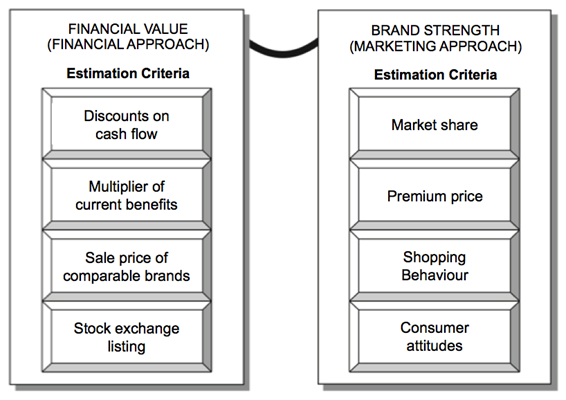
Figure 2.6. Global brand equity perspective.
Source: Adapted from Ambler and Styles (1997)
As a conclusion to this section, and based on the main contributions of the concept of brand equity on a global scale, this perspective encompasses characteristics of the two perspectives analysed above (company and consumer), and integrates all business and market processes existing to create brand equity, as well as focusing research on a more entrepreneurial approach, some towards a more consumption approach and others in a mixed way.
As a conclusion to this second chapter it can be affirmed, following the contributions of the different researchers from the seventies to the present, that brand equity has been a turning point for many companies, being managed from three different perspectives: (1) financial, (2) focused on the consumer and (3) global or mixed. From the author’s point of view, each and every one of the contributions are equally valid and interesting at a scientific and business level.
The different definitions expressed on the concept of brand equity revolve around the idea that it represents an incremental or added value to the product as a result of its identification with a certain brand. The different approaches are not contradictory, but rather their differences lie in the perspective adopted to approximate brand equity and in the scope of the approach followed within each one.
Brand equity can be understood to be a global concept that includes different facets and, therefore, variables of a very different nature related to the main agents that interact with it. For this reason, it is interesting to jointly consider multiple criteria for estimating brand equity, trying to systematize them and establish some sequence or link between them. Finally, it should be noted that the formulation of a framework that integrates and relates several measures of brand equity will allow this concept to be used as a tool for analysis and management.
The next chapter deals with the concept of brand capital, its characteristics and the different currents of thought, in order to decipher its close relationship with brand equity and better understand the consumers' purchasing behaviour and the different perceptions that they can have about the brand.
• Common business language
• Interaction of the agents involved
• Confidence in purchase decision-making
• Satisfaction of use and consumption
• Source of future income
The reign of Coca-Cola is over. After 13 years at the top of the Interbrand list as the most valuable brand in the world, the soft drink company has fallen to third. This is due to nothing more and nothing less than two technology giants: Apple and Google.
According to the latest Interbrand report, Apple, with a value of 98,316 million dollars (28% more than last year), is currently the most valuable brand, followed by Google, at 93,291 million dollars (34% more than last year). The 2013 report begins by explaining that, from time to time, a company changes our lives, not only with its products, but with its ethos. That is why, after Coca-Cola's 13-year career at the top of Interbrand's best global brands, there is a new number 1: Apple.
They are not the only technologists to appear on the list. Behind Coca-Cola are IBM and Microsoft and in positions 8 and 9 are Samsung and Intel, respectively. Among the 100 positions there are also other companies such as Cisco, HP, Oracle and Amazon. The rise of Samsung to this position has been due to a new strategy called Brand Ideal, which includes “greater attention to social purpose,” said the executive vice president and marketing director of the South Korean company, Sue Shim.
Also noteworthy is the presence of Nokia in the 57th position (the Finnish company reached 14th place in the past) and Facebook in the 52nd (despite having grown 43%). Neither BlackBerry nor Yahoo appear on the list.
According to The New York Times, Jez Frampton, CEO of Interbrand, explained that ”Coca-Cola is an excellent brand seller, but other companies such as Apple, Google and Samsung are changing their habits, and how we buy and communicate with each other”.
Last year, when Coca-Cola was still in first place, one of its executives stated that they were happy to lead the table, but that “nothing is forever.” On this occasion, Joseph V. Tripodi, executive vice president of the company, took the opportunity to congratulate Apple and Google.

Image: http://www.interbrand.com
Source: http://www.elconfidencial.com/tecnologia/2013-09-30/apple-y-google-destronan-a-coca-cola-como-marcas-mas-valiosas-del_mundo_34634, Apple and Google overthrow Coca-Cola as the world's most valuable brands, January 29, 2014 (own adaptation).
1. Do you think the Brand Ideal Strategy could be effective for all types of companies? Do you think that it would affect the final balance of a company in any sector in the same way?
2. Why do you think BlackBerry and Yahoo, technology companies, are not among the most valuable brands?
3. What basic requirements should a brand have, in your opinion, to be considered very valuable in the market?